
What’s Wrong with Public Transport in America?
....And what to do in order to fix it

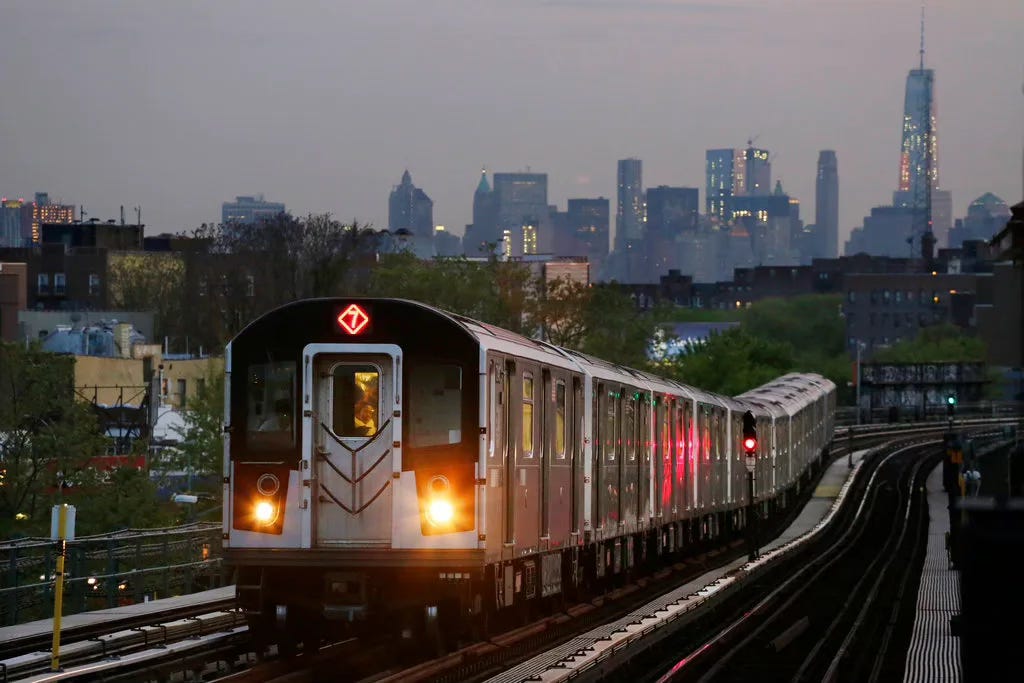
“I like trains. I like their rhythm, and I like the freedom of being suspended between two places, all anxieties of purpose taken care of: for this moment I know where I am going.”
— Anna Funder, Stasiland: Stories from Behind the Berlin Wall
Who needs public transport? What does a metropolitan without public transportation look like?
Why would anyone care about public transport? It can’t be that important. Up until my first year of college, I didn’t realize why people wanted more public transport. I thought that cars were enough. I would go into Boston maybe a few times a year for short necessary errands in a car. Everything changed when I started to go to college. For a few bucks I could get from one part of Boston to another within minutes. I found beauty in millions of people sharing a fixed system of vehicles getting around a dense bordered land to meet their friends; to pick up their children; to go on an adventure; to meet someone you were destined to meet. What I thought was something detestable and disgusting as a child became a beautiful and necessary chaos. If a city’s people are its blood, then the subway is its heart.
What does a metropolitan without public transportation look like?
I can’t even imagine Boston or New York without its transportation. It became so integrated with the identity of the city that taking it away would be to rip away a man’s skeleton. But if we had to imagine it, what would daily life be like? What would the economic impacts be? How would rent and land value change?
Public transport doesn’t just move people; it enlarges the labor radius of a city. A worker who is outside of the urban core of a city can still reliably participate in its economy so long as trains and buses connect them from residential corridors to commercial centers. Without that, employers would have to draw from a smaller employment pool, and prospective workers would also have less potential employment diversity.
The premium on housing and real estate near or on public transportation lines exists because the cost of movement decreases along with the time spent on getting from point A to point B. A joint National Association of Realtors and APTA study found that in seven U.S. regions, households in transit-rich areas were more likely to live car-light or car-free and spent about $2,500 to $4,400 less per year on transportation. Getting around using a thorough system will almost always be faster to use than a personal vehicle. The Metropolitan Planning Council of Chicago found that sales prices and asking rents were found to be 30% higher in areas closer to rail transit. The average commercial property in rail station areas is 16% more expensive than commercial properties away from transit. A location near a station gives residents and businesses something scarce in modern cities: predictable movement. In dense metropolitan economies, predictability often matters more than distance. People may complain about public transit politically, but they pay premiums for access to it.
According to abettercity.org if the MBTA system did not exist the city would need 2300 additional lane miles of road and 400,000 new parking spots. Without that new development congestion would become a constant living breathing organism occurring at all times of the day and night. Streets would have to absorb what rail currently compresses underground. A single subway train can remove hundreds of cars from a road network in minutes. Almost 1,000,000 people’s daily commute would be disrupted in Boston. More land would be sacrificed to parking structures, wider roads, loading zones, and slower pedestrian movement. Every aspect of the city would become something unrecognizable.
“A developed country is not a place where the poor have cars. It’s where the rich use public transportation.”
— Gustavo Petro
What is wrong with American public transportation right now?
There are many issues with American public transportation systems, but they can be understood through three recurring problems: cost disease, weak accountability, and ridership inefficiency.
American transportation networks burn through cash and then complain about underfunding while still asking for more without the rider experience improving. Labor has become the heaviest burden upon these networks, and the inefficiency is difficult to ignore when placed beside international systems. According to its 2025 Integrated Report, the Tokyo Metro transported 2.49 billion passengers in FY2025 while operating with just 11,328 employees, and doing so at a 21.3% operating income margin while actively constructing new lines.
By contrast, the Chicago Transit Authority served 338 million riders in 2025 across over 1,500 bus route miles and 224 miles of rail track while employing 10,869 workers, a staffing level that Tokyo Metro nearly matches while moving roughly seven times as many people. Meanwhile, Transport for London carried over 570 million journeys on the Elizabeth line alone in 2024/25, making it the busiest single railway in the UK, while continuing to expand its network. RATP in Paris served over 3.1 billion trips in 2024 while actively building new metro extensions.
This pattern repeats across nearly every major American system. Even where staffing totals appear similar internationally, each worker abroad tends to move far more people through the network each year. To fix this problem would be a fight with the transportation labor unions. But even France, with their massive union revolts, still manages to serve a significantly greater number of people with lower labor costs, higher efficiency and cleanliness while continuing to build more and upkeep their existing lines.
According to McKinsey, from 2002 to 2022 operational expenditures at US transit agencies grew by 50 percent while the actual hours of service provided grew by only 8 percent, costs rising at over six times the rate of output. The Federal Transit Administration reports that in 2024, US transit agencies collectively required over $55 billion in operating subsidies while still carrying fewer riders than in 2019. Washington Metro, New York’s MTA, and NJ Transit, which carries nearly 12,000 employees against a structural deficit approaching $1 billion, all reflect systems where labor costs consume revenue before ridership can hope to replenish it. Philadelphia’s SEPTA was forced to approve a 45% service cut and a 21.5% fare increase in June 2025 to fill a $213 million recurring deficit.
The wage burden amplifies the imbalance further. The Empire Center reports that MTA employees collected an average pay of $98,892 in 2024, a figure 47 percent above the US average and 80 percent above the US median salary, with overtime alone accounting for 17 percent of total payroll. Higher wages alone are not proof of waste, but when paired with weak productivity they create operating structures with no sustainable path forward.
I want to shift your attention to as far back as 2013, where a sobering pattern was already clear. A Bloomberg review of major U.S. systems showed that even some of the country’s biggest rail networks were still losing roughly a dollar per trip, while weaker systems were losing more than $5 per ride. While agencies such as Tokyo Metro, Taipei Metro, and several European operators sustain positive or near break-even margins over long periods, most major American agencies remain deeply negative even before major capital expansion is considered. Boston, Chicago, Philadelphia, San Francisco, and Washington all operate with persistent deficits that have become a standard with no change in sight.
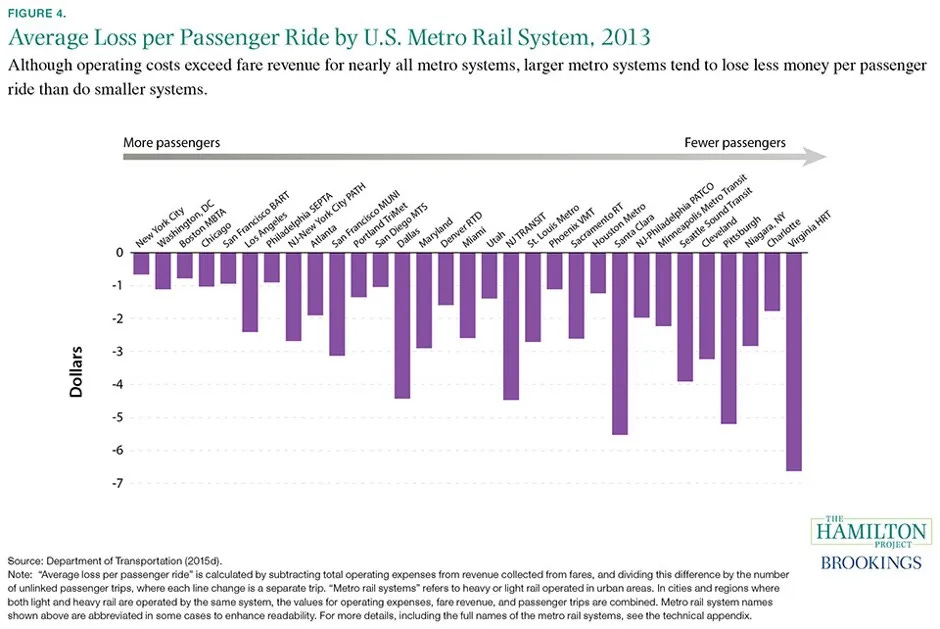
The weak accountability becomes clear from the deficits becoming expectations every year. There is no financial pressure to make difficult decisions such as mass firing and a full internal audit. Federal support is assumed to come through against the losses that are constant. Unlike other transport systems that must justify expansion through projected returns and a strong balance sheet, many American agencies face little internal consequence when costs continue to rise.
In New York, this problem has repeatedly surfaced through investigations into overtime abuse, payroll inflation, fraud and embezzlement within the Metropolitan Transportation Authority. In one 2025 MTA Inspector General report, a station agent at 59th Street/5th Avenue was captured on surveillance video taking cash from riders, letting them through the turnstile, and pocketing the money; the report documented four suspicious transactions and noted that the employee retired during the investigation. Audits have shown workers receiving extraordinary overtime payments, supervisors approving excessive hours, and maintenance work being billed without equivalent visible progress in service delivery. In several cases, overtime earnings pushed individual compensation far beyond already high base salaries, yet these findings rarely go punished. In another 2025 incident the MTA Inspector General uncovered a broader fraud operation within the Long Island Rail Road where employees used cloned identification cards and fraudulent timekeeping records to clock each other in and out while absent from work. Investigators found duplicate cards being used across multiple facilities, including Ronkonkoma and Hillside, allowing employees to be paid for hours they did not work. The report described it not as isolated abuse but as a pattern spread across several locations. Earlier federal prosecutions exposed another form of abuse: senior MTA and Long Island Rail Road workers claimed overtime hours that prosecutors argued were physically impossible, with some reporting hundreds of overtime hours while attending outside activities, including bowling leagues, during the same periods they were supposedly working. One employee earned roughly $461,000 in a single year, far above his base salary, largely through overtime claims later challenged as fraudulent.
When no serious punishment follows inefficiency, it becomes tolerable and easier to repeat. A transit agency will remain underperforming for years while still receiving emergency cash injections because its collapse is politically unacceptable. Ironically the only way to fix the system would be with an iron fist and a willingness to let it fail. It’s said that the dead bird under the nest never learned to fly; American transit systems must be thrown out of the nest and forced to fly or fail.
Ridership inefficiency is the final problem. American systems are not only expensive; they are expensive while moving fewer people per employee, per mile, and per operating dollar. The issue is therefore not simply that transit costs money. Every transit system costs money. The issue comes from the high costs not yielding any gains in output.
“Watch the costs and the profits will take care of themselves”
— Andrew Carnegie
Why should profit be the marker of success in public transport?
It all comes down to profit. The Taipei metro, Tokyo metro, Madrid metro and Paris RER all chase profit but have the best on time performance with the highest ridership. It is not an optional outcome to them; it is a discipline that is constantly upheld. This is directly in opposition to the American systems who claim that in order to keep a system alive, any cost must be accepted. Though there are other measures of success such as land value gains, environmental gains, an expansion of the labor market and reduced congestion, they all come down stream of the pursuit of profit. And that pursuit doesn’t mean the highest amount of monetary extraction from riders but rather forcing a positive relation between costs and output.
State support for systems is not inherently a bad thing. With the high costs of building new lines, network expansion, station remodeling and fleet upgrades coming into the fray, it is necessary for expansion. In Tokyo, major capital projects still require outside funding, but every expansion must be justified through projected ridership, long-term maintenance cost, and expected financial return. They are cut no slack. Financial viability must be demonstrated to secure any external funding. They also have to prove that they can cover the long-term maintenance and operating costs without subsidies. And even after all of that, the national government does not subsidize the entire cost of construction. The Tokyo Metro as an agency must come up with a part of the funding on their own, whether through profits, bonds or bank loans. If a project underperforms or overruns, the agency won’t get its money back and they must live with that. It is a brutal reality but one that has caused it to become one of the best systems globally. A profitable system isn’t one that never receives help but rather one that cannot hide its inefficiency behind the need to stay running for the good of the public.
In some cases there are lines that should exist even if they are not profitable: outer borough lines, social access routes, and low-income corridors. These lift up a city by providing equal and complete access. But it should be an exception rather than the standard. And by doing so, it is possible that in the long term the growth and economic activity caused because of the access can make those lines profitable, if only by a single cent.
Why do international metro systems work better?
To understand why international metro systems are working better than our domestic ones we have to look at what their systems are doing right.
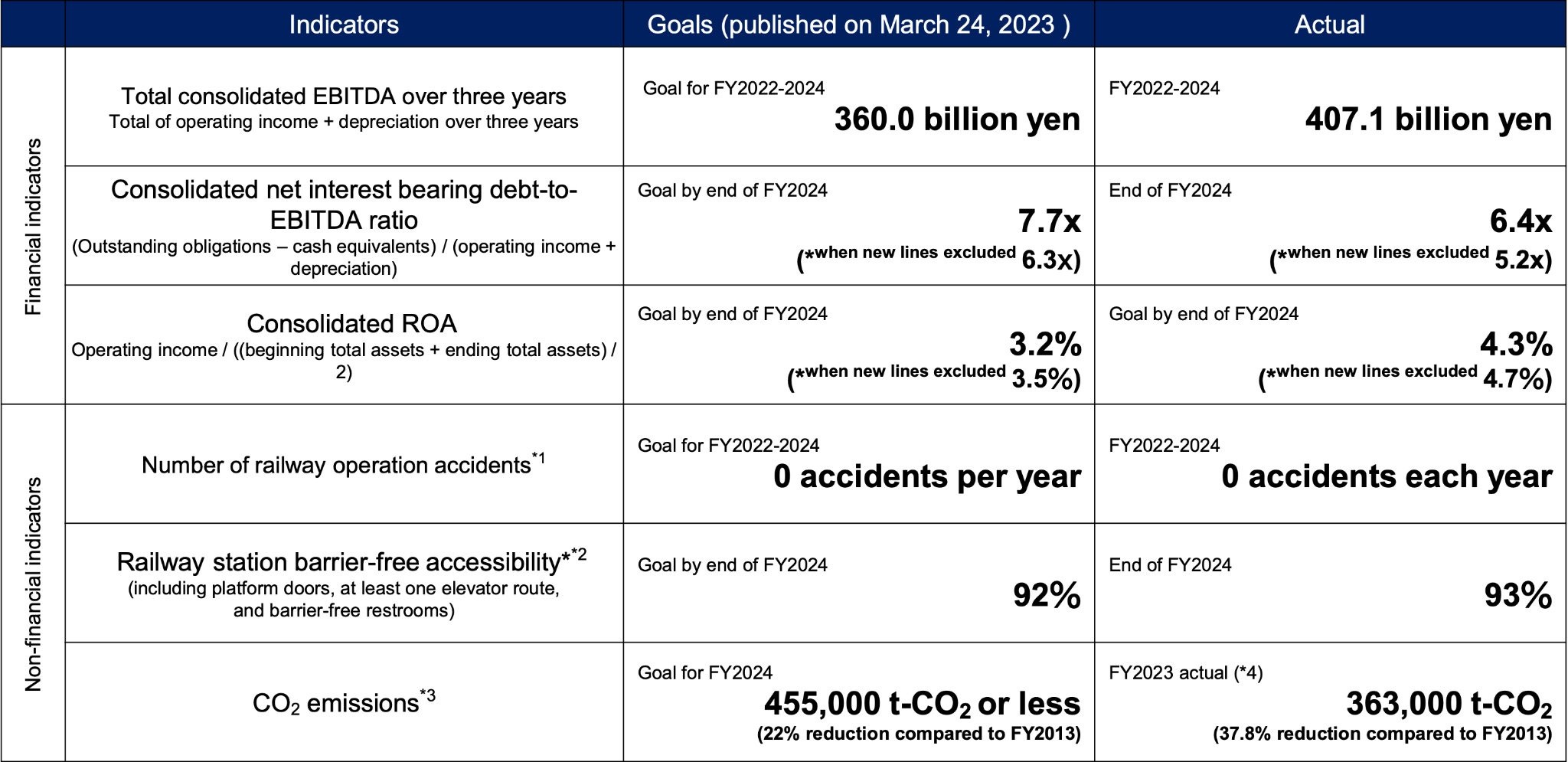
Tokyo metro is not only setting financial goals but beating their expectations while still building new lines. In its mid-term management plan, Tokyo Metro explicitly sets capital-efficiency targets, including ROE, and ties profitability not only to the rail business but also to real-estate and station-area development. Along with this the private rail companies, JR East and JR West are also expanding through the property plus model. This is where rail from farther away is connected directly to retail and employment hubs built into the station including shopping centers, office buildings, and food/restaurant halls. The value that is created from passenger movement is not left to escape. It is cultivated to allow for new ways to profit for the private rail companies in order to offer even more service.
The Madrid metro shows us a different angle to profit: spending less. They display superb cost control without sacrificing the usefulness of the network. The system avoids excess architectural construction and hyperfocus’s on throughput and simplicity.
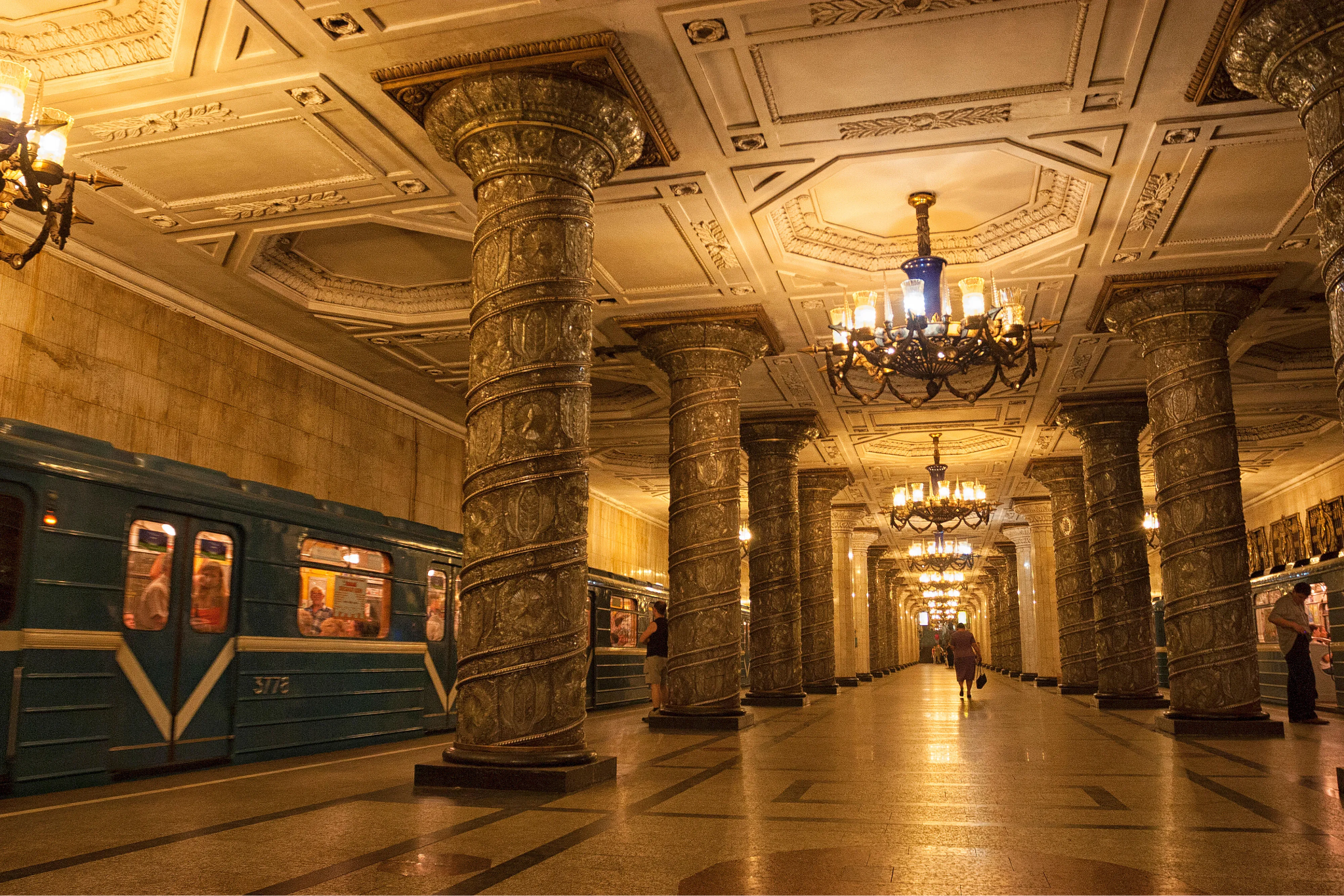
The Moscow metro offers another model where high-capacity movement exists alongside strong centralized planning. Its stations are among the busiest in the world, trains arrive at extremely short intervals, and the system is designed around moving very large passenger volumes continuously. What I want to point out here is the beauty of the stations. It has been said that walking through their stations feels like walking through a museum. I have always held the contention that even in utilitarian objects, beauty should not be forgotten. Beauty inspires the people of a city; of a nation. A dull, muted, modern construction may serve its purpose, but it will not be revered as a thing of beauty for generations to come. Even if one day the utility of the Moscow Metro ends, it will not be torn down because it would become an artifact to treasure and preserve. I cannot say the same for the concrete tunnels of other networks.
In Paris, the public transportation is thorough and integrated with a unison of buses, trams, subway and commuter rail networks. As one of the international systems I have personally used, I found it to be clean, and quick. Suburban connections allowed me to efficiently make my way into the city. Just because a subway itself is dense doesn’t mean bus routes and dedicated tram routes should not be developed. Trams can even run along similar routes above ground as the trains underneath because they serve different purposes. Underground heavy rail leaves you slightly disconnected from the environment above you but for short distances Trams feel like an extension of walking where you can hop on and off, going from one street to another.

“I’m not sure he’s wrong about automobiles,” he said. “With all their speed forward they may be a step backward in civilization -- that is, in spiritual civilization. It may be that they will not add to the beauty of the world, nor to the life of men’s souls.”
— Booth Tarkington, The Magnificent Ambersons
Why did America choose roads?
The weakness in American public transport was formed through a century of policy decisions that made roads simple to fund, easy to expand and politically easier to defend. Car ownership and the picket fence was sold as the American dream. Materialism and individualism spread and mutated causing what we have now: unwalkable urban sprawl and endless asphalt.
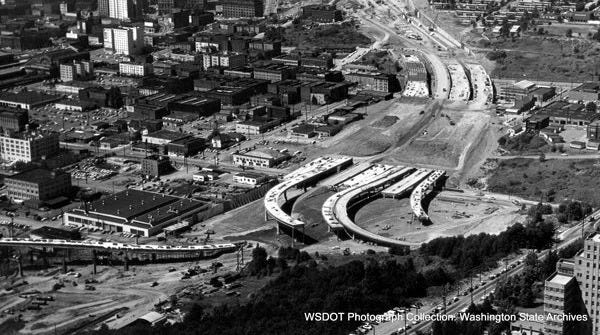
The decisive shift ensued with highways becoming a federal priority. The Federal Aid Highway Act of 1956 committed massive national resources to interstate road construction. Roads were built so fast that city transit agencies couldn’t keep up. The political benefits came from promised construction jobs, suburban growth, military mobility, and immediate public symbolism. A highway could be opened, photographed, named, and politically claimed in ways a maintenance budget for rail couldn’t.
Suburbanization also changed daily life for Americans. Cities sprawled out further and further away from metropolitans. When they did so, not having a car wasn’t an option. It became a necessary part of movement and also a sign of American achievement. Low-density neighborhoods, separated commercial zones, and expanding residential developments made rail less convenient unless it had already been built first. Once suburbs spread beyond older rail corridors, roads became the default infrastructure because they adapted more easily to dispersed settlement.
This shift was reinforced by powerful industrial interests. Automobile manufacturers, oil companies, tire producers, and road construction firms all benefited from a transportation system where each household depended on private vehicle ownership. The more cars were sold, the more Americans drove, the more roads required expansion, and the more fuel was consumed. Federal transportation funding increasingly reflected this bias, with vast long-term commitments directed toward highways while urban transit systems often depended on fragmented municipal budgets and delayed federal assistance.
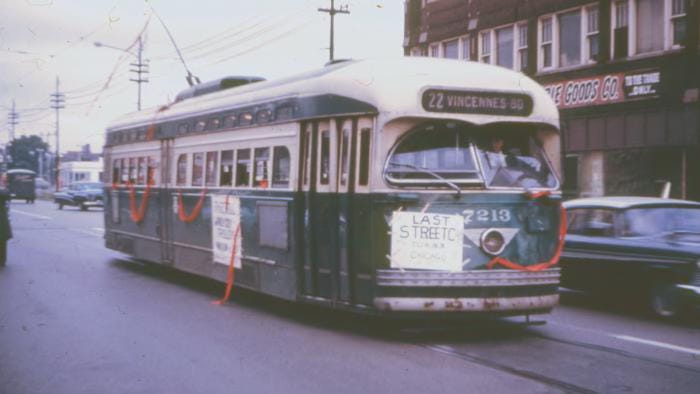
Before this transition most American cities had dense webs of streetcars. From about 1890 to 1930, streetcar suburbs spread across the United States, and by 1907 the country had more than 34,000 miles of electric streetcar track. They were electric rail vehicles running through city streets connecting neighborhoods to commercial districts. As cars running through the cities increased, public opinion on them changed from being useful to being a nuisance for drivers. Streetcars became vulnerable as the roads of cities were shifted to serve cars. The tracks would occupy valuable road space. The mixed traffic would cause more congestion and increase commute times. The maintenance cost rose but municipal governments delayed reinvestment. As Governing put it, the rise and fall of the streetcar suburb is partly the story of how government dollars, or the lack of them, reshape urban planning and housing development. The streetcars were left to deteriorate and fell into such bad shape it became more optimal to rip it all out and dispose of them than to fix the system. They were many times replaced by bus service which had low short-term costs and a greater flexibility, but the systems were not equal. There were tradeoffs, and what has now transformed into BRT (Bus Rapid Transit) systems have their own issues but that is for another time.
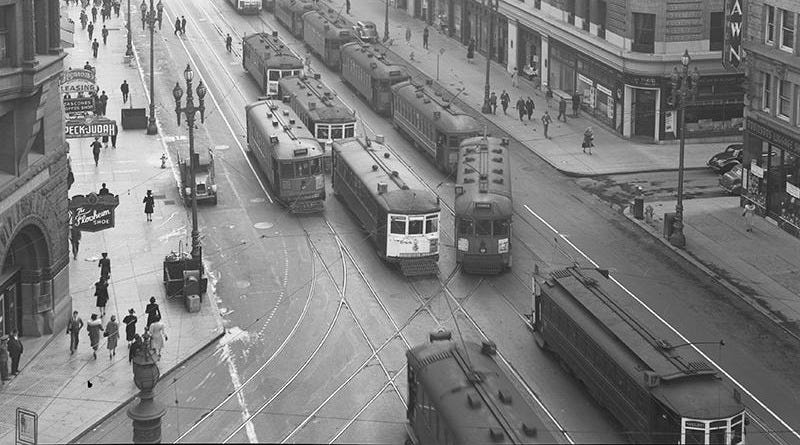
When roads were widened, intersections redesigned, and parking expanded, the street itself was gradually redefined around cars rather than shared public movement. Social corners were destroyed. Natural footpaths and the chaos of the street was replaced with depersonalized metal hulls shooting down long straightaways. What disappeared was an entire way of city life.
What can we do now?
For public transportation in America to get better, it must first be forced through a period of failure that can no longer be hidden behind subsidies, excuses, and endless promises of future improvement. More money will not save systems that have forgotten how to use money well. Before new expansion, before ribbon cuttings, before another request for emergency funding, there must be a reckoning inside the institutions already running the networks. A cleansing is overdue.
A full internal audit should not be optional. Every overtime record, every delayed maintenance contract, every project paid for but unfinished, every fraudulent abuse of payroll must be dragged into daylight. Agencies that have treated annual deficits as normal should be forced to explain exactly where the money went and why the rider continues to tolerate dirtier stations, slower trains, and weaker service. Where abuse is found, people should lose jobs. Where fraud is proven, punishment should be severe enough that the next person thinks twice before trying it again.
The current management must also be overhauled. Those that have let disarray continue without any protest must be let go. Transit systems cannot keep operating through layers of committees where responsibility disappears the moment failure appears. Someone must hold direct authority, and that authority must come tied to consequences. If service collapses, if budgets are blown through, if projects stall for years, there should be no hiding place inside bureaucracy.
Current levels of employment are unacceptable and unnecessary. And the pay received for the work that is being done is much higher than can be sustained by an agency that hopes to be transparent and profitable. The unions that have heralded this unrealistic standard must be fought with and pushed out.
The truth is that some comforts will have to disappear. New contracts must be written around service to the rider and taxpayer. Fares may have to rise in order to fix what has been blatant neglect, but the new influx of cash would clearly have to result in a better experience for users of the system. Riders should not be asked to pay more into systems that still tolerate waste as routine.
Then comes rebuilding. Train cars and stations must be cleaned until they feel civilized again. The small things: broken lights, jammed doors, dirty floors and tracks, and graffiti that have not been taken care of must be fixed. Maintenance that should have happened years ago must finally be done. Railcars must run so reliably that riders stop checking schedules and proceed with a sense of confidence. Only once a strong and healthy balance sheet has been created, can expansion be allowed whether on new lines or new hiring but not both at the same time. This expansion would be to reconnect disconnected districts, build tram corridors above ground, and turn stations into places of commerce and beauty rather than dead, dirty, dilapidated concrete waiting rooms.
Only by accepting the risk of complete failure may a chance at redemption be earned.