
The Best Brands Don't Sell Products; They Build Communities
In an AI-flooded market, the last thing brands can't automate is belonging.


According to Merriam-Webster, marketing is defined as “the process or technique of promoting, selling, and distributing a product or service.” Just as the times change, trends also change. In the ever-shifting world of marketing, with AI becoming a great equalizer for products, the playbook has changed yet again and highlighted one specific aspect of selling: the community. At Boston University, my field of study—marketing—covers this change. With any product, regardless of what it is, the main question is: how do I get the customer to want this?
Humans are naturally inclined to seek belonging in the confines of a group. For our ancestors, to be outcast meant losing access to protection and resources—conditions which could prove fatal. Social exclusion no longer carries the same consequences for people but the instinct to belong is ingrained within us. Today, that instinct is often leveraged to market identities and lifestyles by appealing to our enduring desire for acceptance.
For decades, consumer choice was largely governed by usefulness: which product worked better, lasted longer, or cost less. A motorcycle was simply a way to get from one place to another; a phone was a tool for communication and running shoes were made to improve athletic performance. As the economy has expanded and markets have become more crowded, products have become easier to replicate, and utility alone is not enough to create lasting loyalty. The most successful companies have learned to sell something more desired alongside their products: a feeling, or an identity. Harley-Davidson sells the image of freedom and rebellion. Apple sells innovation and status. Nike sells achievement and empowerment. In each case, the product may originally bring a customer in, but the identity surrounding it gives them a reason to stay. The brands that create lasting loyalty are often the ones that make consumers feel that buying from them means joining something larger than the product itself.
The Timeline
To uncover how the strategy of community building became so successful, we need to understand why there was a marketing shift from products to identity. Before World War I, thrift was more culturally valued than consumption, and the idea of “the consumer” was not yet a central part of American culture. That changed in the 1920s, when U.S. companies could produce a larger amount of goods, more than what people needed. Instead of simply supplying existing demand, businesses now had to convince people to want more. Edward Bernays openly defended this approach in his writing on advertising and public desire. Charles Kettering captured the new mindset in 1929 with his article and phrase, “Keep the Consumer Dissatisfied.”
After World War II, television gave advertisers a much stronger way to sell their products through images, stories, and emotion rather than straightforward product claims. Brands were able to connect with their audience in a more personal way. As television became widespread in the 1950s, advertising began moving away from the common “unique selling point” model and began moving towards campaigns built around recognizable brand identity.
At the same time, companies increasingly took products which were once associated with upper-class life and marketed them to ordinary consumers as attainable status symbols. Buying became a way to feel socially elevated, not just a way to meet practical needs. Inspired by his uncle Sigmund Freud, Bernays wrote in his book “Propaganda,” that people had begun desiring items not because of their “intrinsic worth or usefulness” but because they were “an evidence of his success.” This shift made consumer goods a form of social signaling. Products could now communicate wealth, success, or belonging without the buyer ever having to say it directly.
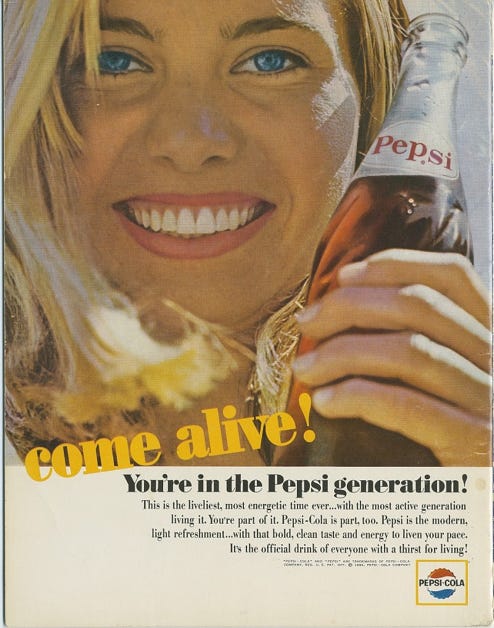
By the 1960s, advertisers were targeting young people’s values and attitudes. This audience was “Come alive! You’re in the Pepsi Generation!” color advertisement, January 1965. Courtesy of the Smithsonian’s National Museum of American History. forming their own unique culture and ideas. They also had money to spend and were able to influence their parents’ spending habits. With this, advertisers became more creative. The Pepsi Generation campaign is a prime example of how brands were less focused on selling their products, and more on creating a lifestyle. Other brands soon followed suit such as Campbell Soup and Volkswagen.
Once companies realized identity and status could be as persuasive as usefulness, branding became less about explaining what a product does and more about showing what owning it says about you.
Psychological Aspects
Lifestyle branding works because consumers are not always choosing products only for their function. Instead, they are often drawn to brands that reflect their identity, or who they want to be. Emotional marketers utilize three social ideas to connect their consumer with their product. The first is identity, which influences individuals to buy things that align with who they are, or who they want to be. Nostalgia uses preexisting emotional ties to make a brand unforgettable. Lastly, social proof makes the individual feel like the purchase of a product is an entry point into a larger group. That impulse becomes more powerful when a brand starts to feel like a group rather than a company. Social identity theory argues that people build part of their self-image through the groups they believe they belong to. In that sense, being an “Apple person,” or a “Nike person,” can become more than just a buying preference. It can instead become a small part of how someone views themselves. People also tend to compare their own group favorably with rival groups, which explains why certain brand users might isolate themselves from the other brand users. This can create a sense of belonging or community.
The psychologist Russell Belk described this as the “extended self.” This concept, which combines anthropology, psychology, and sociology, explain the idea that possessions can become extensions of identity rather than objects separate from it. An item may serve a practical purpose, but it can also help someone express the image they want to project. A person who buys Lululemon may want to be seen as athletic, while someone who buys from Trader Joe’s may want to appear healthy. In this way, the product becomes meaningful because of what it seems to say about its owner. Brands did not create the human desire to express identity through possessions, but through connecting ideal values and lifestyles to certain items, they have become extremely effective at utilizing this aspect of human behavior. The result is that some companies are not competing to sell better products. Instead, they are competing to offer customers a more compelling version of themselves.

Legacy Brands Strategies
Two quintessential examples of companies who have utilized this type of marketing are Harley-Davidson and Apple. Harley-Davidson’s appeal extends well beyond the motorcycle itself. The company has long tied its brand to freedom, independence, adventure and rebellion. These values make riding feel like a lifestyle rather than a form of transportation. For customers, owning a Harley can signal that they identify with more of a risk-taking version of themselves. But the brand’s most effective move was not just attaching those ideas to advertisements; it was giving riders a community where identities could be shared with other people.
This became especially important to Harley’s business turnaround. In 1983, the company was near extinction. By 2008, it had become a top 50 global brand which was valued at $7.8 billion. Harvard Business Review links part of that recovery due to Harley’s decision to build a brand community around the activities and lifestyle of riding. Rather than treating customer culture as an extra marketing benefit, the brand put focus on community building. This community created the Harley Owners Group or H.O.G. With more than 1,400 official chapters worldwide, H.O.G. gives members recurring reasons to interact with both the company and one another. There are rides, rallies, charity events, local meetups, etc. This matters because it makes Harley an active part of a rider’s social life, not just their purchase history.
That deeper relationship also has a direct business value. The company remains connected to their customers through the gear they wear, maintenance they need, and what bike they may choose to buy next. In a 2024 interview, a H.O.G. representative said members ride twice as often and spend 30% more than non-members. These figures are presented as Harley’s own estimate. Members also become informal advocates, introducing friends to the brand and offering feedback to improve the overall riding experience. Harley’s community therefore creates more than just loyalty. Customers spend more, promote the brand voluntarily and choose to willingly identify themselves with the brand’s values.

Apple uses a similar approach to Harley-Davidson’s. It shows how lifestyle branding can make loyalty profitable by turning individual products into an ecosystem that customers commit to. The company has built its image around innovation, simplicity and status. An Apple product can signal that its owner is modern and technologically fluent, not just someone who needed a new phone or laptop. That identity matters because Apple makes its products feel like entry points into a preexisting world rather than isolated purchases.
For many customers buying an iPhone, AirPods, Apple Watches, and MacBooks are not viewed as separate purchases. Instead, they are parts of one connected source that is designed to work together smoothly. This helps to explain Apple’s unusually strong customer retention. iPhone retention is reported to be 92%, while roughly 79% of iOS users remain in Apple’s ecosystem instead of switching to Android. The more products a customer adds, the more convenient the ecosystem becomes. At the same time, the choice to start over with a different brand becomes less appealing.
The ownership data shows how this ecosystem creates opportunities far beyond the initial phone sale. Among iPhone users who own a wearable device, 81% own an Apple Watch, compared to 24% of non-iPhone users. The same pattern appears with iPads and AirPods: 69% of iPhone users own an iPad and 60% own AirPods, compared to non-iPhone users who own these products at much lower percentages (21% of non-iPhone users own an iPad, and 13% of non-iPhone users own AirPods). These numbers depict a clear pattern and connection between all of Apple’s products.
This loyalty to the ecosystem allows Apple to make riskier decisions, while trusting that their consumers will stay loyal. One example came in September 2016, when Apple announced that the wired headphone jack would be removed from the iPhone. This decision initially frustrated many users, since it made their existing headphones less convenient to use. But it also created an opening for Apple to introduce AirPods, which were released in December of 2016. These quickly became one of Apple’s bestselling products in a short span of time. One might think that people would have just switched to a different brand, but that would mean users would give up more than one feature. It could mean replacing a phone, watch, computer, etc. In that sense, the headphone jack decision proved that Apple could turn a potentially unpopular product change into another opportunity for cross-selling, all because of the brand loyalty they had created.
This is the unique business advantage behind Apple’s lifestyle branding. Apple is not relying on one-time sales. It builds a customer relationship where each purchase reinforces both the practical value of the ecosystem and the customer’s attachment to the brand’s identity. The result is repeated buying and customers who are less likely to switch to another company because of a lower price. In Apple’s case, belonging to the brand is not just emotional; it is reinforced every time its devices work together.
New Brands Doing Community Right
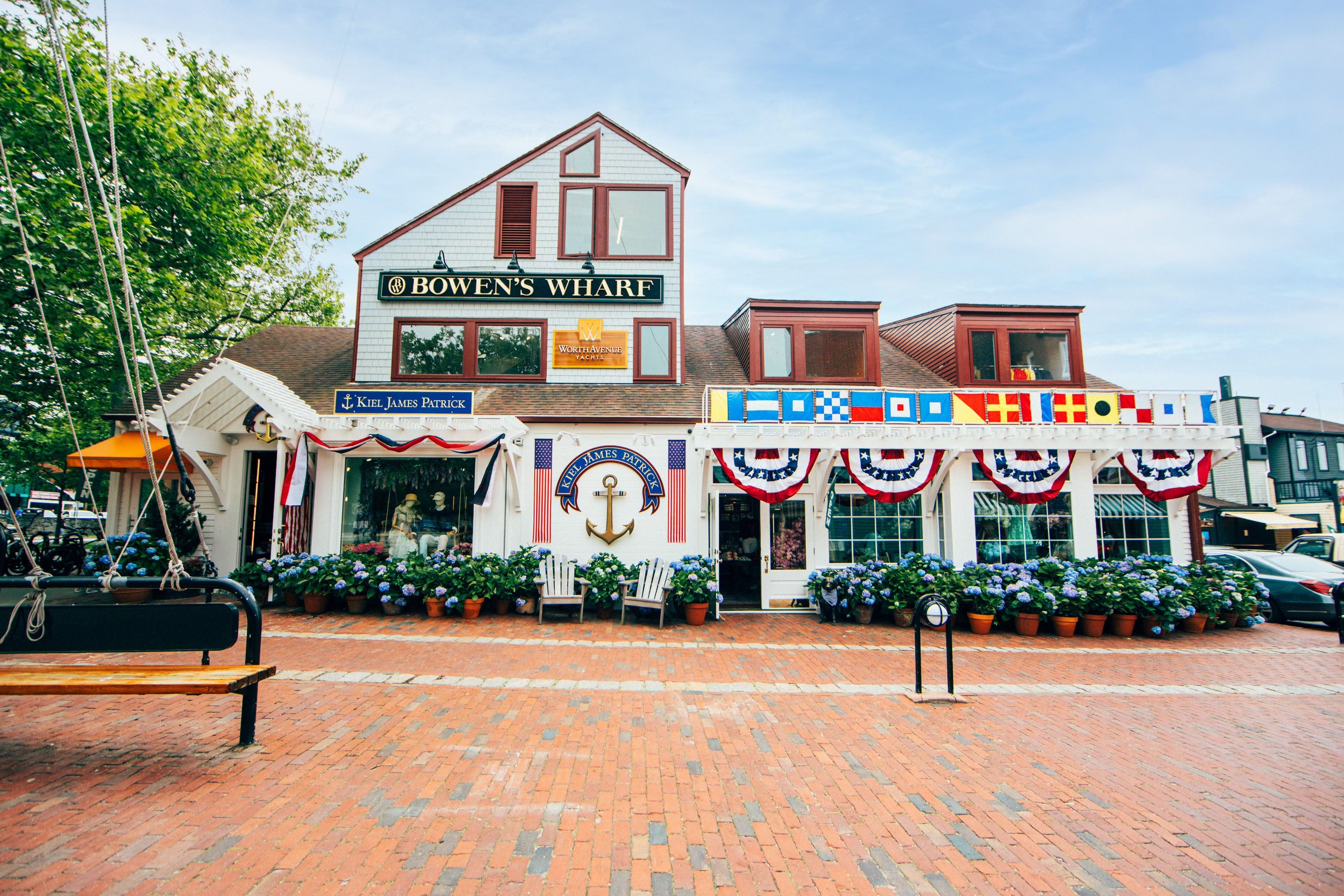
Kiel James Patrick, a growing competitor to companies like Ralph Lauren and Brooks Brothers, doesn’t merely sell sweaters, dresses, shirts, jewelry and hats. They sell a romanticized version of New England. They evoke an emotion, a nostalgia, of autumn foliage, coastal Rhode Island, sailing, golden retrievers, and classic Americana. Even those who never purchase a clothing item engage with their world because it represents something that lies beyond the clothing. Customers see on their social media, a story of a life that they long for.
Your physical appearance is a form of initial communication with people that you meet. It indicates personal values, aspirations, personality and taste. Clothing is a social language expressed without any words being relayed. Thus, clothing companies are not only racing to make the best piece of clothing using the finest fabrics. With every aspect of their customer facing retail, from the way their store is decorated to the models they use and designs on their social media, they are projecting a certain message. With something that is like a second skin, what the pieces represent is as much of the clothing as the fibers used to make them.
Ffern, a British fragrance company founded in 2017, didn’t make community a part of their distribution plan. They made community marketing their central distribution network. They don’t have a large fragrance catalog and celebrity endorsements. They focus on building a mystique around their product doing 4 releases a year in accordance with the 4 seasons. They are extremely exclusive products due to the fact that they are made in small batches and never produced again. Rather than allowing anyone to purchase a bottle at any time, the company operates through an invitation-based waiting list known as The Ledger, where prospective customers wait for the opportunity to receive the next seasonal fragrance. Their brand delivers a message of craftsmanship, detail, and true beauty through their abstract, cinematic advertisements. The feeling of limited access taps into the fear of missing out. Combined they have a formula that is working. Each season it seems like more people want to purchase Ffern fragrances.
The Value of Loyalty
Emotional loyalty is valuable because it changes how customers behave long after the first purchase. According to Harvard Business Review, emotionally connected customers can be worth more than twice as much over their lifetime as customers who are simply satisfied. They tend to buy more, recommend the company more often, and become less sensitive to price. For companies, this means that the goal is not just to prevent customers from leaving, but it is to create a relationship strong enough that customers continue choosing the brand even when a competitor offers a more convenient alternative.
McKinsey estimates that replacing one lost customer can require acquiring three new ones, making retention far more valuable than companies sometimes treat it. Its research also found that customer experience leaders generated double the revenue growth of lagging companies between 2016 and 2021, partly because much of a company’s value comes from increasing revenue from customers it already has. That loyalty can have a major impact on growth. The Journal of Small Business Strategy estimates that returning users generate a massive 60% of total revenue despite making up less than a quarter of traffic, making retention far more valuable than companies sometimes treat it. Repeat visitors showed a conversion rate over four times higher than brand-new users, partly because much of a company’s value comes from increasing revenue from customers it already has. The strongest brands take this a step further by turning loyal customers into a source of new business. A Journal of Marketing Research study tracking a large-scale consumer field dataset found that referred customers went on to make between 31% and 57% more downstream referrals than those acquired through traditional channels. This research demonstrates how this business model can be extremely valuable.
The Future of Marketing
Marketing is now being completely reshaped by artificial intelligence. Companies can use AI to analyze customer behavior, create tailored product suggestions, and efficiently make different versions of a message for smaller groups at a large scale that wasn’t once humanly possible. McKinsey argues that AI can help brands create more relevant offers and messages for “microcommunities,” instead of relying on general and broad promotions. This may make community-based marketing even more effective because companies can communicate with their different types of customers in ways that feel more personalized and connected to their interests.
However, AI also makes it easier for companies to produce large amounts of generic content. HubSpot’s 2026 State of Marketing report describes AI as becoming a baseline tool rather than an actual competitive advantage, while trust, a clear brand point of view, and human insight are what still help companies stand out. In the future, successful marketers will likely use AI to respond and personalize messages more quickly, but the formation of real communities will still depend on an authentic brand experience. Technology can make a message feel more personal, but it cannot create a true feeling of belonging if the company has nothing meaningful to offer its customers.
Conclusion
We live in a time where making a good product does not guarantee success. Day by day markets become increasingly saturated, and competitors can replicate products more quickly than ever. New companies who hope to build out a niche must find new ways to differentiate themselves.
Rather than competing solely on price or quality, something which often pressures businesses to sacrifice margins or lower standards, companies can create value through something far more difficult to imitate: a sense of belonging. That feeling, though existing exclusively in the mind of the consumer, still has a tangible effect. Emotional connection increases customer loyalty, raises lifetime value, encourages repeat purchases, and inspires customers, unprompted, to advocate for a brand.
New products and services will continue to enter the market, and consumers will always have alternatives. They are not permanently loyal to the largest or oldest companies. They are loyal to the brands they think represent and understand them. Something connected to an identity larger than themselves. A persuasive product attracts a first purchase, but what remains draws them after that? It’s the compelling character and a genuine group that keep customers returning. Switching products is easy. Switching communities is not.
Disclaimer
The content published in Nummus is for informational and educational purposes only and does not constitute financial, investment, legal, or professional advice. The views expressed in this article are those of the author and do not represent the views of Nummus or its editors. Readers should not rely on any content published in Nummus as a basis for making financial or investment decisions and are encouraged to consult a qualified financial advisor before doing so.
 |
|