
Reflecting on Donald Trump’s Tariffs: Why Growing Protectionism is Flawed Yet Based on Valid Concerns
A Closer Look at the Political and Economic Forces Behind America's Shift Toward Protectionism

While reading the book Globalization and Its Discontents and discussing the state of political divisions with my peers, I found myself inspired to take a closer look into how America reached such a point of deep ideological cleavages pertaining to economics. Why do so many people vigorously clash over the President’s economic policy?
It has been just over a year since President Donald Trump’s sweeping waves of tariffs, including the groundbreaking “Liberation Day,” and although the Trump administration has increased the United States’ military and political presence globally since then, he has not changed his rhetoric regarding his economic policy. Instead, Trump favors a protectionist agenda, joining the movement against globalized, free-market economies.
This position is not an isolated one; rather, it is just one step within a larger global movement favoring protectionism. On an international level, political changes often come in waves, and many Western countries are currently a part of a wave to change the way they navigate through the globalized international economy; notably England with its Brexit plan and French political movements under the leadership of Marine Le Pen.
Many constituents in these countries believe that the free market approach their country has adopted is sub-optimal at this time, leaving out key demographics from the economic prosperity that globalization has promised for so long.
So why is the United States, the most economically rich and powerful country in the world, sharing this same sentiment? Albeit an entirely separate issue, why this administration, as well as past US administrations, has pursued protectionist policies is just as important an issue to discuss.
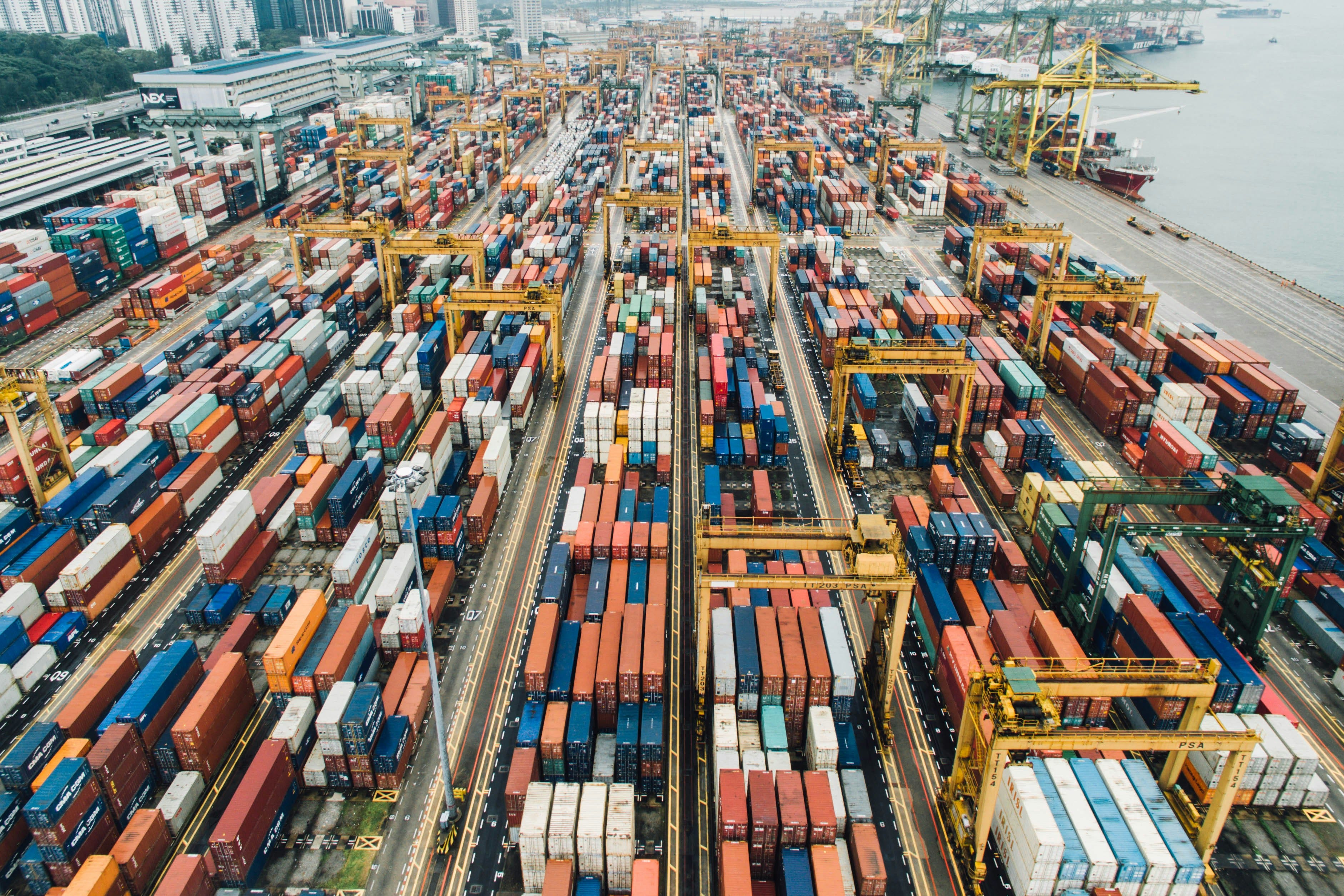
Let us start with understanding the America First movement, one that is predicated on the idea that engaging with foreign nations is a waste of resources and leads the United States to be taken advantage of, whether it be from an economic, political, or military standpoint. Currently, a large portion of the country, often working blue-collar jobs, believes globalization has destroyed American industries. The reality is, in some ways, they are correct: globalization has overlooked many Americans. It falsely promised a mathematically proven way to increase the wealth of this country; however, it truly comes with nuanced tradeoffs, helping some and hurting others.
In America, people who work in a given factory, call it Factory A, compete against Factory B in terms of the price of goods, quantity, wages, and other outputs. This competition ensures that Factory A cannot impose unfairly low wages to cut costs, as workers will simply move to work at Factory B, keeping American workers and their prosperity secure. However, the problem with globalization is that Factory A is no longer competing with Factory B; in reality, they are both competing with Factory C, one that exists halfway across the world with minimal labor and wage regulation. This causes these jobs to be outsourced to countries that produce goods at a cheaper rate, cutting prices for consumers, yet leaving many Americans without work.
This issue becomes exacerbated by recent industry changes to promote environmental sustainability and slow the destruction of our planet, leaving even more workers in industries such as oil, coal, and mining looking for new work.
So while many benefit from lower costs and cheaper wages, we can see many in this country, particularly those who subscribe to the America First movement’s ideology, suffering from the effects of globalization. Unfortunately, they incorrectly identify the source of the issue, often blaming immigrants despite the extensive economic research that proves the impact of immigration to be grossly overestimated and, if anything, a benefit to the economy.
While globalization is marketed as a mathematically proven net-positive, in wealthy nations, it actually benefits those who were already rich while leaving many blue-collar workers behind. This is common knowledge among economists, and if the U.S. does choose to sign the social contract of living in a globalized economy, it needs to share the benefits and costs among its population in order to optimize the positive impact of globalization. Yet recent welfare cuts move policy in the opposite direction, arguably exacerbating the very problem that gave rise to the America First movement.
Understanding the support for anti-globalization movements among constituents only goes so far when analyzing policy. One must also study why policymakers pursue these agendas, and it is important to remain critical of the justifications politicians give for their policies, going beyond simple face-value interpretations.
If a politician believes that their proposed agenda is best for America for a given reason, they will do what it takes to get it passed. If the optimal implementation strategy entails listing a different or incorrect justification for their policy because it will resonate more with American voters, then that is the most effective action they can take.
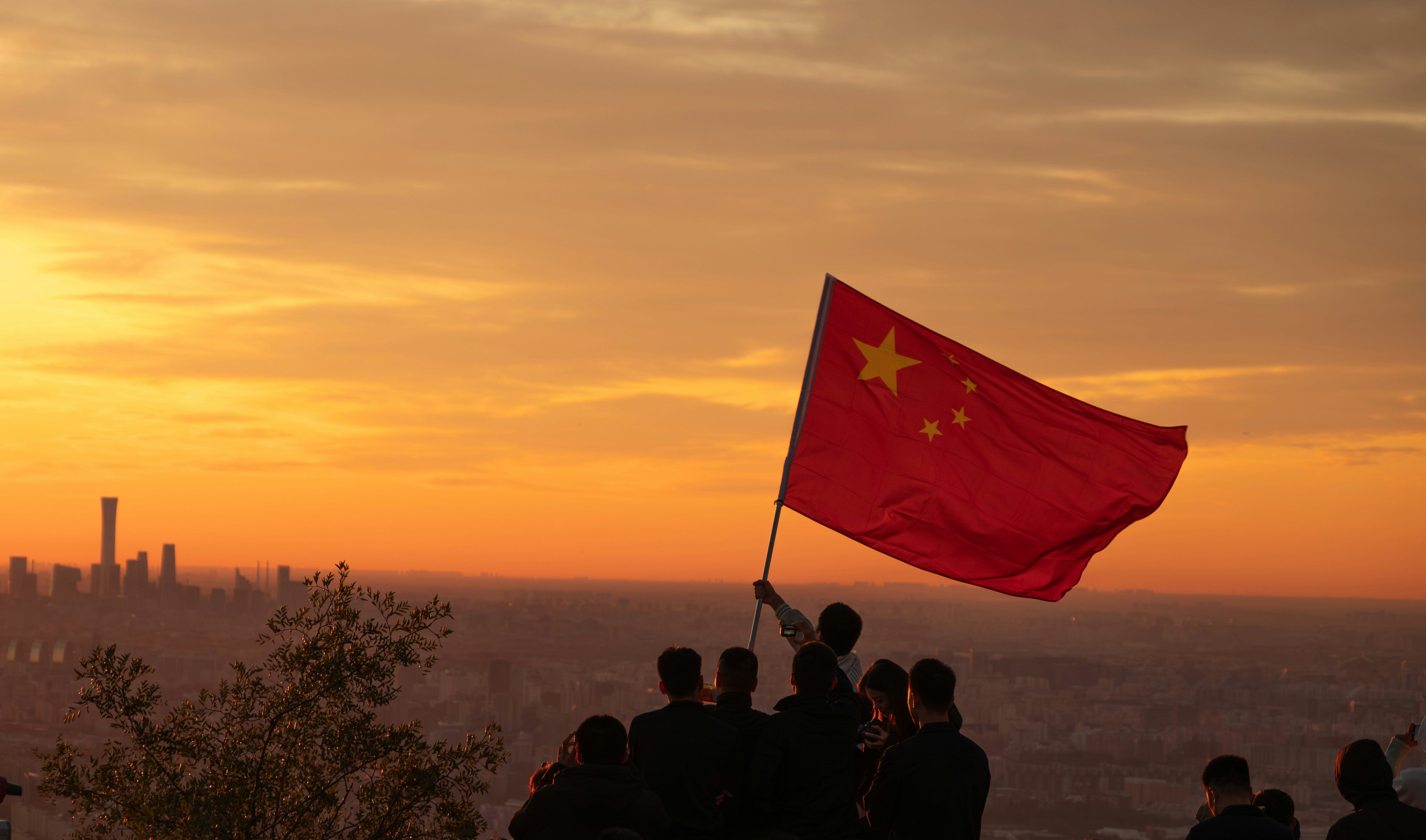
A famous example of this is President Bill Clinton’s PNTR deal with China in 2000, one that claimed to bring democracy to China through trade despite there being no evidence of a causal relationship between trade and regime type. Clinton, surrounded by top economists and foreign policy experts, likely knew this, yet listed the justification of bringing democracy to China, as it sounds appealing to Americans who are not knowledgeable about foreign policy. In hindsight, Clinton could have prevented World War 3 with this deal by establishing strong economic ties linking the United States and China, raising the costs of a war between the two.
With this in mind, although Trump has given reasons for why he pursued tariffs and a new age of protectionism, one can not take his words at face value. There could be many reasons why he believes in tariffs.
The primary justification he gave was disparities in bilateral trade relationships that resulted in the United States importing more than exporting to a foreign country. This notion that a negative bilateral trade balance by itself indicates a country is being “ripped off” is a view that most economists consider unrepresentative of the complexities of international trade.
In these circumstances, American businesses and consumers are choosing to pay a foreign country more than they pay the U.S. for goods and services. If this exchange were genuinely unfair to American interests, market forces would presumably lead consumers and firms to redirect that spending domestically or elsewhere. The dynamic resembles the relationship between a customer and a barber: the barber provides a valuable service that the customer pays for, but the customer is under no obligation to sell the barber a good or service in return, and no one would characterize this asymmetry as exploitative.
Another possible explanation for the tariffs results from the decline in American hegemony; however, it only serves to explain tariffs against China. Though it is debated whether we live in a unipolar or bipolar international system, it is accepted that each day we step closer and closer to a bipolar system, essentially meaning that China is catching up to create a second pole or global sphere of influence that can contend with the United States.
In political theory, a bipolar system causes the two poles to care deeply about the relative gains in power between the two countries. Furthermore, when one country in a bipolar system, the United States, is declining in power relative to the other, they rush the action, trying to bring about a decisive conflict before they are no longer able to contend with the other.
This was potentially the United States’ goal regarding tariffs on China. The US may be losing its advantage over China and is initiating conflict in hopes of limiting its power base before it is too late to challenge it. Although traditional economic thinking would cause a policymaker to stray away from the absolute losses that tariffs bring about, an international political economist would argue that tariffs can be necessary in an instance where relative gains are prevalent if the United States can hurt China more than it hurts itself.
At first glance, this looked like it was possible and is potentially the source of confidence for Trump in his numerous trade wars against China. The United States is China’s biggest importer at $525.65 billion worth of exports, almost twice as much as its next largest importer. This is an incredible advantage for the United States, as China is dependent on U.S. markets to sell its goods and services. Therefore, given China’s dependency, tariffs could hurt China more than they would hurt the United States.
Incidentally, the idea of Trump using the country’s imports as an advantage over China proves that he probably does not believe a negative trade balance is indicative of the United States being taken advantage of by other nations.
However, after taking a closer look, this advantage does not play in the United States’ favor as much as it appears to. The common narrative is that China has weak domestic markets and relies on its exports for income. However, China’s domestic markets have been growing rapidly, with consumer spending growing to $6.963 trillion in 2023, a 103.1% increase from 2013. In short, China has been growing its domestic markets extremely well, and it is still just scratching the surface. Therefore, a rise in export costs resulting from tariffs would only incentivize more domestic growth for China, having an unintended positive effect.
In the end, most experts agree that the United States ended in a weaker position as a result of the tariffs against China, and it earned the president the unflattering nickname TACO (Trump Always Chickens Out). The Trump administration’s expectations regarding how a trade war would go are unclear, but the aim of imposing costs on the Chinese economy, given the importance of relative gains, is a valid potential reason for why Trump favored protectionism at that moment.
A third theory also stems from the place the United States finds itself in regarding the international political economy. After the Second World War, the US built the liberal international economic order, instating a rules-based system centered around free and globally integrated markets. After years of success in the United States, as outlined earlier in this article, this global system has recently begun to harm the US in some ways, helping other nations like China more than it does the US. As a result, America has taken a step back from its unequivocal support of this globalized system, slowly creeping closer and closer to protectionism.
Under President Barack Obama, the United States started selectively blocking the appointment of judges to the Appellate Body, an integral part of the WTO that acts as a supreme court for global trade, due to unfavorable rulings. Under the Trump administration, the United States has blocked the appointment of all judges, and now, the court sits entirely dormant, with zero judges to hear cases.
Once the liberal international economic order, founded upon an institutionalized, rules-based framework, no longer behaves optimally for U.S. interests, it tears down the system, preventing any nation from thriving within the old regime. The same can be said for the Trump administration’s use of tariffs: if free markets help competitors like China more than the United States, then the free market system is perceived as flawed.
Since Obama’s presidency, each administration has asserted some degree of protectionism, even President Joseph Biden, who kept and expanded upon Trump’s tariffs from his first administration. These actions are a product of America’s declining economic power and its use of the rules-based economic order.
However, it remains to be seen if tearing down the system is the optimal way of fixing America’s problem. China and the EU do not need to wait for the United States to reshape the global order, but this time they will do so in their favor, with China being heavily incentivized to maintain the integrated global economy that has spurred so much growth for the nation relative to the U.S. Therefore, by sitting out, the United States may be missing its final opportunity to alter the system in its own favor. For instance, when the next WTO Appellate Body is created, the United States will likely not have the same authority over the court.
We can see how the reasons for rising protectionism in America are understandable, both within the population and political administrations. However, the movement away from globalization as opposed to a restructuring of it, in my view, is the wrong strategy. The United States can enact clear and definable policies to overcome the recent burdens of globalization, such as sharing the financial costs and benefits among its population. While the U.S. remains far ahead of other nations in terms of overall economic influence, the strategy going forward should focus on reinforcing that position through deeper, more balanced participation in the global economy, rather than retreating from it.
 |
|