
Nuclear Fusion: Why the Science is Credible but the Commercial Case Remains Uncertain
Nuclear Fusion and Its Potential to Transform the Clean Energy Landscape

Back in elementary school, I recall two field trips that really stuck with me. One to the aquarium, and one to the Boston Museum of Science. Part of the schedule was watching a documentary called Dream Big, and something about it stayed with me to this day. From that day forward, my curiosity and passion for science grew exponentially. I remember so many books on my summer reading list being about aquatic life, the rainforest, planets, stars, etc., all by personal choice.
During my sophomore year of university, I found myself spending time exploring fields that I had never formally studied: astrophysics, quantum physics, climate, and environmental science. What connected all of it was a deeper curiosity about the natural world that we all live in. At the same time, the urgency of climate change was becoming impossible to overlook, both for me personally and for society, with climate issues arising every year.
My senior year, I got in contact with my professor Carlos Rufin, who first introduced me to nuclear fusion after presenting my renewable energy research pitch. While conducting my research, I interviewed Professor Dennis Whyte from MIT’s Plasma Science & Fusion Center. I walked away from both conversations with a newfound appreciation for Nuclear Fusion and the impact it can make. I wrote this paper with the purpose of examining Nuclear Fusion and its potential to shift the renewable energy landscape; making meaningful progress on climate change and transforming the way we power the world.
Introduction
In the late 20th century, the IPCC Second Assessment report concluded evidence suggesting that the human race had a “discernible influence” on climate change (IPCC, 1995). This became one of the first significant international scientific statements consolidating human activity and climate change. In 1997, the Kyoto Protocol was the first primary policy response from developed nations, with a binding target of reducing emissions by 5% below 1990 levels by the 2008-2012 period (BBC News, 2011). However, cooperation proved difficult, as the U.S. refused to ratify the treaty. By 2015, the Paris Agreement engendered a wider global framework, with major industrial countries agreeing to limit warming levels well below 2 °C, with a pursuit of 1.5 °C (BBC News, 2011). However, in 2024, global temperatures exceeded this limit, rising 1.5 °C past the industrial average for the first time, with recent years being the hottest on record (Luhn, 2026). Despite these agreements, progress remains behind schedule. In the State of Climate Action 2025 report, it was concluded that progress toward joint goals as well as all 45 established indicators were well off track. Deforestation alone accounts for more than 10% of global emissions, not to mention that deforestation slows CO₂ conversion rates. Coal accounts for more than 40% (WRI, 2025).
Keeping all this in mind, demand for energy is not slowing down and could rise significantly by 2040 due to factors such as AI, data centers, electrification, industrial activity and transportation (IEA, 2023; McKinsey, 2025). We now encounter a thorny contradiction: how are we going to reduce emissions and produce more energy simultaneously? Current renewables consist of solar, wind, hydropower, biomass, ocean energy, geothermal, and the like. Despite being important pieces of the energy transition, they still produce emissions and waste in some way or another. IRENA defines renewable energy as energy that comes from natural sources that are constantly replenished. Despite this, renewables have their limits. Solar and wind depend on weather conditions, while hydropower and geothermal energy can only be utilized in certain geographical areas. In addition, anything large-scale needs storage and infrastructure. Therefore, the large-scale energy transition we have in mind will not be able to rely solely on one solution alone (IRENA, 2016). This is where nuclear fusion is introduced.
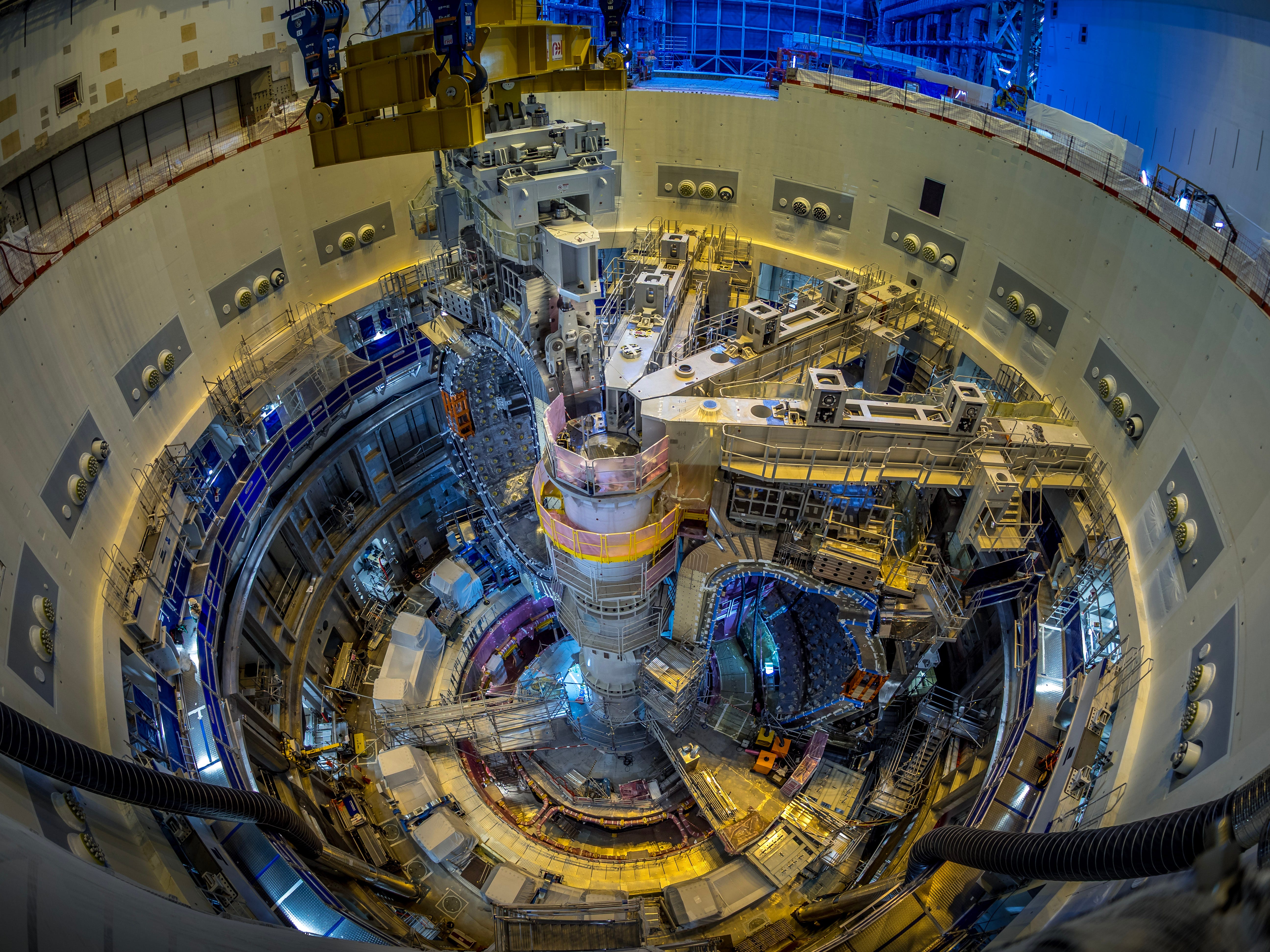
MIT’s Plasma Science and Fusion Center has collaborated with CFS to construct SPARC, the world’s first fusion technology that produces plasmas with net fusion energy. Following the adequate development and growth of SPARC will come ARC, the world’s first fusion power plant. The significance of the project is exemplary as it is the first step taken toward a carbon-free, mass-produced, and limitless energy that is compact, economical, and safe (CFS, n.d.; MIT PSFC, n.d.).
While fusion is very promising, this does not make it economically or commercially viable yet. Running a successful fusion power plant is not comparable to an experimental success. Commercial fusion in its current stage still requires substantial development in plasma confinement, durable materials, heat extraction, power conversion, grid integration, safety systems, and regulatory approval. All of which vary by region. Fusion is not only a scientific issue. It is an economic, engineering, regulatory, and deployment issue. Therefore, fusion must be assessed holistically as a whole system rather than the process alone. So far, fusion is scientifically credible and has major potential long term to provide massive amounts of clean energy but is not yet commercially developed. The future of fusion will ultimately depend on whether we can successfully progress past engineering, scaling, regulatory and integration obstacles. This paper will assess whether nuclear fusion is viable as a large-scale commercial energy source (Haber, 2025; Ward & Lopes Cardozo, 2025).
What Is Fusion?
Nuclear fusion is a subatomic process that merges atomic particles, more specifically light hydrogen isotope nuclei, deuterium and tritium. When combined, the process releases a substantial amount of energy since the resulting mass is lighter than the original. The missing mass is then converted to energy via relativity (E = mc²). This merging is a defining characteristic of the process, and is not to be confused with nuclear fission, which is the splitting of a large nucleus. This reaction results in helium, a neutron, and substantial amounts of energy. Enough to power a city. This process is also what powers our sun and stars (Haber, 2025; Trinh, 2021).
The primary difficulty with this process is the extreme conditions that need to be harnessed and contained in order for fusion to work. Since the particles are both positively charged, they will naturally be repelled from one another. Therefore, a certain speed and temperature are required in order for the collision to result in fusion. This temperature is undoubtedly high, in the range of millions of degrees, at which point matter becomes classified as plasma. Plasma is a state in which electrons and nuclei are separated, allowing charged particles to move freely. The catch with this is that the plasma cannot by any means touch the walls of the reactor, because it can cool down and damage the walls of the reactor. That is why plasma confinement is a crucial piece of the puzzle, with the primary option being magnetic confinement (Haber, 2025).
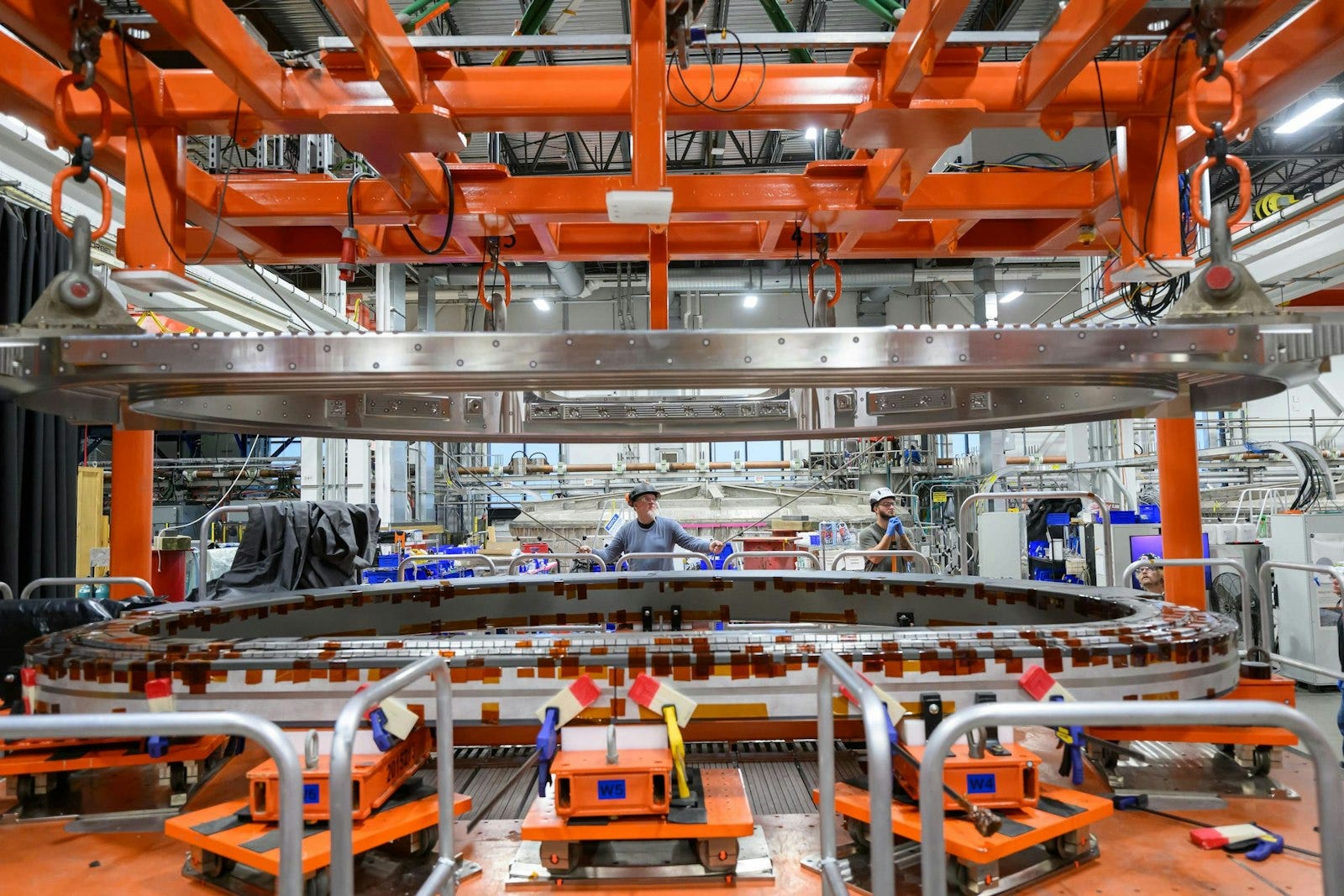
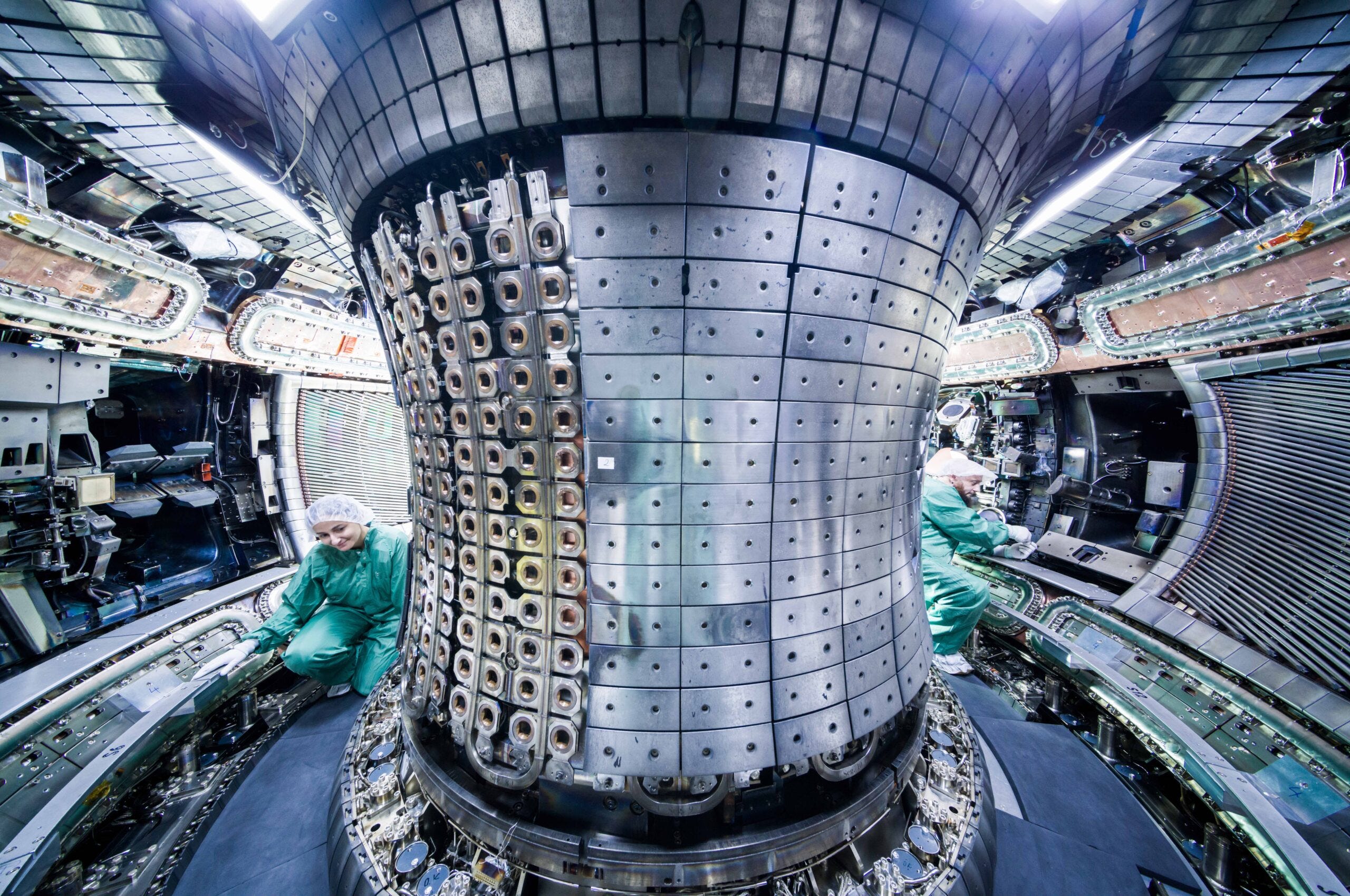
Tokamaks and stellarators are the two primary approaches to this, with tokamaks having a doughnut shape that confines the plasma while stellarators utilize complex, twisted magnetic fields. As of late, advanced superconducting magnets were developed and tested in SPARC, with the significance that it can make reactor designs even more compact and commercially viable (CFS, n.d.; ITER Organization, n.d.; MIT PSFC, n.d.).
All that being said, a successful fusion reaction does not mean the job is done. Dennis Whyte emphasized this distinction in an interview, “You have to extract the energy…and put it in a usable form” (Whyte, personal communication, 2026). This supports the idea that a commercial power plant must do more than produce reactions. It must produce more energy than it consumes, extract and convert heat efficiently, operate reliably and safely, and withstand extreme neutron bombardment over time. Additionally, it needs fuel cycle systems, cooling systems, shielding, maintenance accessibility, and grid connection. Overall, although the scientific foundation of fusion is established, further development still needs to be made commercially and economically prior to deployment. This distinction is central to understanding that fusion’s viability is not in question due to the science that backs it, because on paper it is very appealing; but rather the conditions that are required and need to be sustained in order for fusion to scale commercially (Haber, 2025; Lo & Whyte, 2024; Ward & Lopes Cardozo, 2025).
Scaling Fusion for Commercial Use
When discussing how fusion will scale, projects like SPARC can give a good example of what is considered compact in the context of fusion; it is important to note that this does not mean compact in the traditional sense. SPARC was not intended to be commercial, so they did not develop it that way. However, SPARC remains smaller than other fusion projects because “the size of the device is extremely sensitive to the strength of the magnetic field” (Whyte, personal communication, 2026). This gives background to why superconducting magnets are impactful: the stronger the magnetic field, the smaller the size of the reactor.
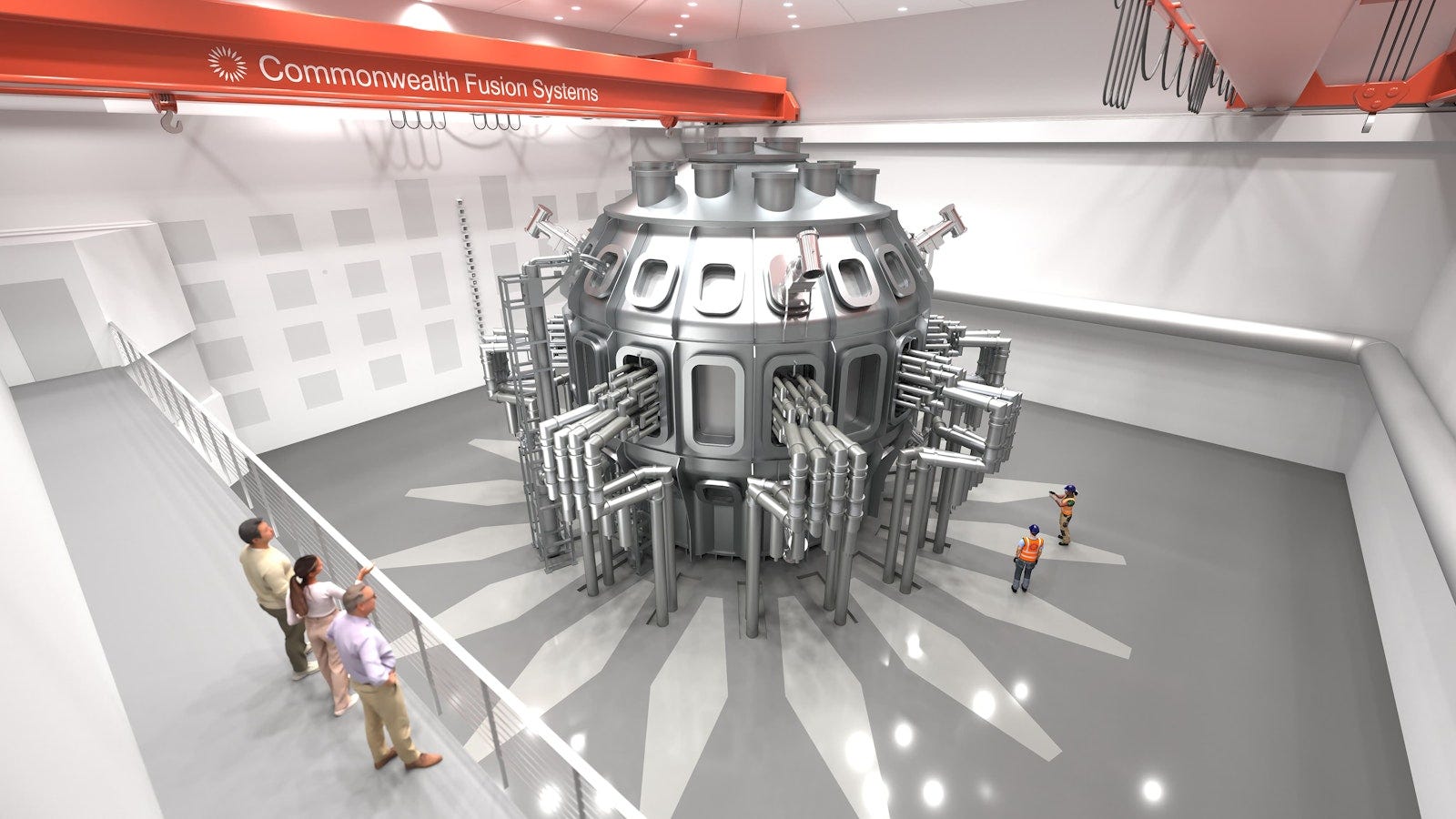
As the follow up design, ARC will be developed with the intention of being a power production system. The expected scale is anywhere from 200-250 megawatts which makes it a serious industrial facility. What this means commercially is that it will require more capital, specialized infrastructure, will have longer construction timelines, and is a bigger risk financially. Even if fusion does develop into a more compact design, there will still be difficulties of operating energy infrastructure that large (CFS, n.d.; Sorbom et al., 2015).
The next barrier is engineering durability. Internal components would have to constantly be operating under extreme heat, stress, and neutron bombardment which can damage materials over time. “The relative risk is starting to emerge…around materials, heat, exhaust, and so forth” (Whyte, personal communication, 2026). Ensuring that reactor materials can withstand all the wear over time is essential. Replacing and repairing parts becomes a commercial and economic issue due to the downtime and specialized maintenance raising operating costs; indirectly impacting profitability (Haber, 2025; Sorbom et al., 2015).
Build time is another obstacle that affects fusion viability. Commercial technology becomes easier, quicker, and cheaper to build once a learning curve is surpassed. However, this process takes more time for larger and complex projects. This means that there are fewer chances to learn and reduce costs along the way. That is why smaller models are much better for deployment. However, so far, we only have projects like SPARC to look to for reference. Therefore, exact construction timelines are indefinite, as commercial fusion has not yet been put in motion. Economically, this means that investment will prove to be more difficult to obtain because investors and policy makers cannot be certain of build schedules, timelines and relevant cost reductions (Lo & Whyte, 2024; Ward & Lopes Cardozo, 2025).
Overall, one element that is central to dictating the feasibility of commercial nuclear fusion is scaling. In principle, fusion seems viable because the science is credible and progress has been made on many fronts. However, turning science into integrated and operating infrastructure that meets all standards is challenging. This is not a minor detail that can be easily worked out after the science is perfected. This is a deciding factor in whether or not fusion will be commercially viable. Scaling is difficult for numerous reasons. Engineering is a significant first step, but when scaling, other factors such as region-specific regulations, investment fund accessibility, implementation, etc. all come into play (RMI, 2024; Ward & Lopes Cardozo, 2025).
Integration
Theoretically, if fusion can be scaled into a functioning power plant, the next question that comes to mind is how well fusion energy systems can integrate into already existing systems. For fusion to make an impact commercially, it needs to be useful to the grid. There are demands that need to be met; production has to match demand, systems have to fit into already existing infrastructure, and operate within the same energy markets. Even if fusion produces energy, it won’t matter if energy cannot be produced in the correct quantities, reliably, affordably, and at the right time (Haber, 2025; Ward & Lopes Cardozo, 2025).
The role fusion may have in energy systems is being a source of clean and large-quantity energy. Fusion is unlike solar or wind, which produce intermittently, depending on weather conditions. If reliable, fusion could provide a steadier stream of electricity. This would best fit and be of most value in systems where there is gradually growing amounts of intermittent energy. If fusion systems operate reliably, they can make up for supply gaps when solar or wind output is low. This is largely dependent on the efficiency of the tech, because if there are frequent setbacks due to maintenance, the downtime will cause major delay and negate usefulness. Siting requirements are also an important point to keep in mind because fusion systems have operational requirements as mentioned previously. Regionally, grid needs, regulations, cooling access, land availability, proximity to transmission, as well as public acceptance all affect siting. Fusion may have developed engineering and design, but is the infrastructure required to run it available? (Haber, 2025; Sorbom et al., 2015).
Another small thought to consider is whether fusion can have other uses besides electricity. In theory, it can serve for desalination, hydrogen/fuel production (hydrogen derivatives), heat, etc. This matters because some industries do not need electricity to decarbonize, but rather high temperature heat for example. However this is currently a theoretical outcome since no fusion plant has yet proven that reliable production of these materials is feasible (Ward & Lopes Cardozo, 2025).
Integration is another unsolved piece to the puzzle. Fusion must prove that it can operate reliably, connect to the grid, meet siting and infrastructure requirements, and compete with other energy tech in order to successfully integrate (Haber, 2025; Ward & Lopes Cardozo, 2025).
Economic and Commercial Viability
If fusion can be scientifically perfected and integrated into the grid, the next step would be establishing its future commercially. That depends on economics. Cost competitiveness is a major deciding factor in the commercial success of fusion. However, an important factor to consider is the fact that commercial plants do not yet exist. Therefore, any numbers available as of now are projections rather than calculated costs. The uncertainty is an issue in and of itself, because investors are wary of commitment to projects with ambiguity regarding many of its elements (Lo & Whyte, 2024; Ward & Lopes Cardozo, 2025).
Construction Cost
A major economic uncertainty is cost. As mentioned previously in the scaling section, fusion plants are complex, large, and not simple to construct. Timelines and costs are indefinite for a SPARC or ARC style plant. Superconducting magnets, shielding, cooling, tritium handling, and power conversion equipment are all specialized and required parts that are not easy to secure. Therefore, construction cost can be perceived in this case as more of an unresolved risk rather than a known level of investment (CFS, n.d.; Sorbom et al., 2015; Ward & Lopes Cardozo, 2025).
Operating Costs
Operating costs are one of the primary costs that are ongoing and must be weighed. For fusion to be competitive, it has to operate at a reasonable cost per megawatt-hour. This depends on how frequently the plant can produce and sell electricity without downtime. The more setbacks, the higher the cost per unit of electricity, while also incurring maintenance costs (Lo & Whyte, 2024; Ward & Lopes Cardozo, 2025).
Tritium
Tritium is debated on when discussing its pertinence to fusion economics. It does have its role, but should not be overstated. In an interview with Dennis Whyte, he explained that the tritium concern is exaggerated, because many arguments are based on outdated assumptions. The CANDU reactors in Canada have a tritium supply that is “sufficient to actually start a fusion industry” (Whyte, personal communication, 2026). Whyte went further in depth, stating that the long-term fuel cycle depends more heavily on deuterium and lithium, because tritium is produced in reactions involving lithium. This does not mean tritium is irrelevant, but rather “the thing that’s in the in-between” (Whyte, personal communication, 2026). Therefore, tritium should be perceived and treated as a fuel cycle management issue rather than a barrier to viability.
Market Entry
Realistically, the best suited market entry for fusion would be to target high-value customers first, then later shift to broader competition with other affordable energy sources in the market. In early stages, fusion will fit best in high energy demand industries such as data centers, military facilities, regions with high cost of electricity per unit, and regions with emphasis and requirements on clean energy. These are regions like the EU and Asia. These customers may be more open to paying a premium for consistent, low-carbon energy because that is what their operations depend on. Once operations become more cost efficient, fusion can look to expand into broader regions (Lo & Whyte, 2024; RMI, 2024; Ward & Lopes Cardozo, 2025).
Economic Takeaway
Overall, the economics of fusion remain unresolved, but still promising. If all obstacles can be surpassed, fusion has the potential to cause a major economic shift in the energy market. However, the commercial case is not yet fully proven (Lo & Whyte, 2024; Ward & Lopes Cardozo, 2025).
Regulatory, Safety, and Environmental Viability
If fusion surpasses economic and scientific challenges, it then has to meet regulatory, safety and environmental standards before deployment. New energy technology and infrastructure always have to be licensed and accepted by the public. Fusion has many safety advantages compared to fission, but is not risk free when considering radiation shielding, activated materials, etc. One of fusion’s strongest advantages is that it does not have the same runaway chain reaction as fission. Fusion depends on very specific plasma conditions, so if those conditions are disrupted in any way the reaction will not carry through, which diminishes meltdown risks. However, regulations remain constant, as tritium still needs to be contained and monitored, and activated material waste has to be managed during operation and decommissioning (Haber, 2025; ITER Organization, n.d.).
Fusion is very environmentally positive, because it does not produce any fossil fuel emissions. However, it is not completely impact-free. Construction materials, cooling systems, infrastructure, radioactive waste management, etc. are all still needed. It is still much lower profile in terms of waste, but they should still be considered when judging fusion as a whole. Fusion does admittedly have many environmental and regulatory strengths, but that does not guarantee flawless deployment and growth. Therefore, environmentally, fusion is comparatively safe, but still dependent on solid regulation and controlled deployment (Haber, 2025; ITER Organization, n.d.).
Overall Viability Assessment
When assessing fusion holistically, the answer is dependent on the form of viability discussed. Scientifically, fusion is credible and has been successfully tested. The basic physics is understood, and SPARC shows that we are moving closer to developing practical commercial applications. From an engineering perspective, fusion is incomplete. The goal is not only to produce a reaction, but to sustain a plant that operates as it’s expected to. This matters because it determines if fusion can be developed into a legitimate system. All things considered, fusion still shows promise engineering-wise (CFS, n.d.; Haber, 2025).
Economics remains one of the most uncertain domains in fusion. Since we have no legitimate cost figures to refer to, we have no numbers to look at in terms of costs in any sense. We cannot determine if fusion can be considered commercially viable until it proves that it can be affordable, repeatable, and operate efficiently with minimal downtime (Lo & Whyte, 2024; Ward & Lopes Cardozo, 2025).
Regulatory and environmental viability are favorable because fusion does not produce any fossil fuel emissions, nor does it carry the same reaction risks as fission. However, as stated prior, fusion does not come without risk; this does not negate viability, but does mean that deployment will require careful management. (Haber, 2025; ITER Organization, n.d.).
Finally, an important point to mention that is central to the viability of fusion is education and community development. “It’s not just about the technology, it’s… the ecosystem…there should be way, way more people… coming with fusion, with a wide variety of different skills.” (Whyte, personal communication, 2026). Academia, companies, and educated workers are all the basis of what it takes for fusion to have accelerated growth. The fusion industry needs more teachers, students, professionals, researchers, engineers, market experts, and regulators that understand fusion from various angles to make this market succeed (Whyte et al., 2023).
Conclusion
Fusion remains one of the most compelling long-term possibilities in renewable energy. Its potential capacity is unlike any technology we have today, and if perfected, can cause a shift in the paradigm. However, it is not yet ready to expand, and its success depends on the resolution of economic, regulatory, engineering, and infrastructure barriers. Therefore, fusion should be understood as a developing but promising technology with major potential. If fusion reaches the required level of maturity, it could become a major part of clean power generation in the future. Until then, its feasibility is plausible but developing.
 |
|