
Latin America, The Market, Economy and Opportunity Worth Looking Closer
The region most global investors have written off may be the one they can least afford to ignore.

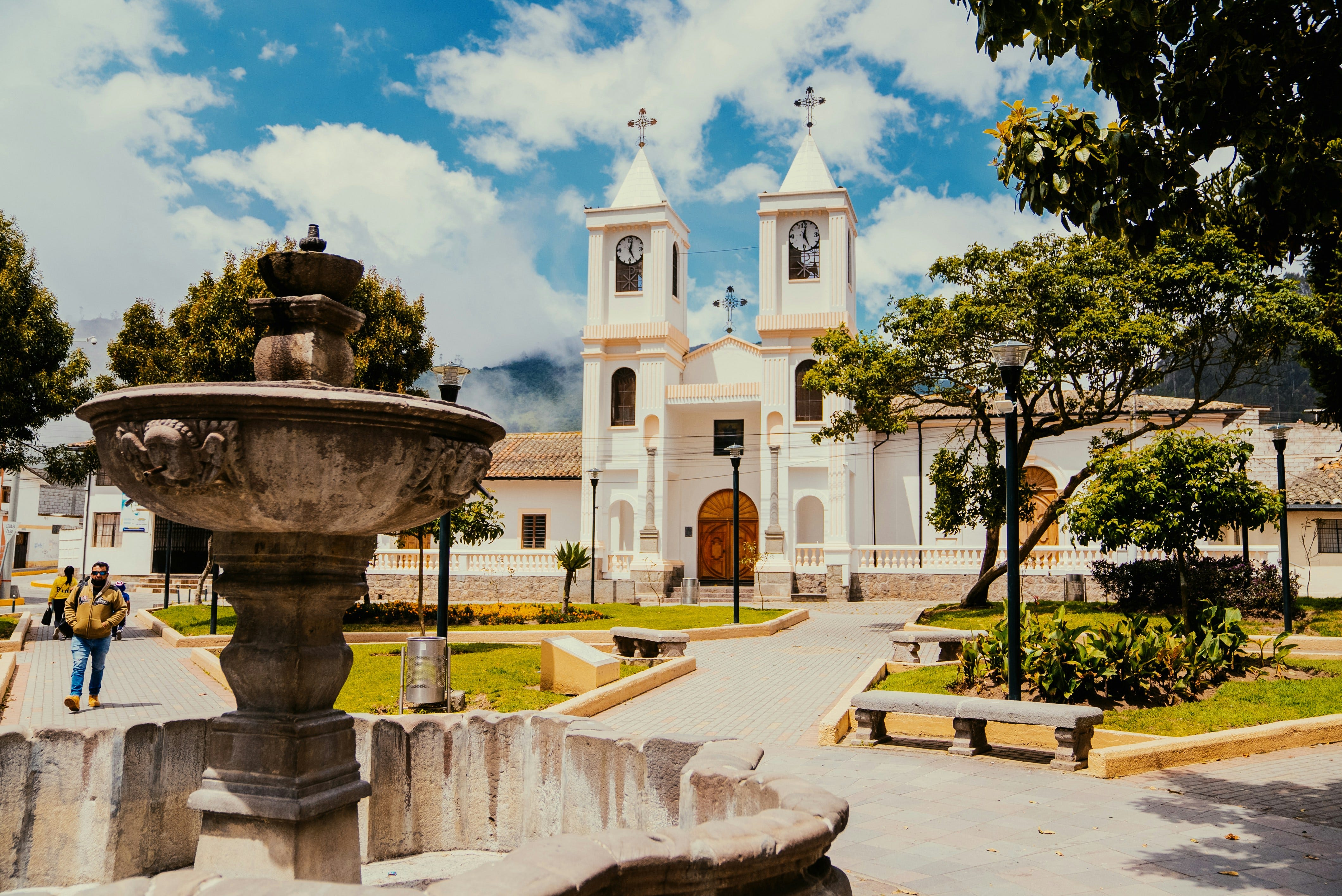
In 2021, Latin America had a moment. Deal volume was hitting records, Brazilian tech companies were listing in New York, and global investors who had spent years avoiding the region were suddenly paying attention. It felt, briefly, like a turning point. Then came the rate hikes, the political turbulence, the currency pressure, and the pullback. By 2024, Brazil’s deal market had contracted sharply from its peak.
It is tempting to read that arc as the whole story: Latin America as a place that promises more than it delivers, that rewards patience only to punish it. But that reading misses something important. The boom-bust cycle was real, but so was the recovery that followed. The underlying reasons to care about the region did not change because global rates went up for two years.
What changed is that capital got selective. And selective capital, in a market that most people still underweight, tends to find the better deals.
The Gap That Keeps Not Closing
Here is a number worth sitting with. Latin America represents roughly 7% of global GDP. It commands well under 2% of global private equity capital. The entire region’s combined PE and venture capital assets under management sat at $56.6 billion in 2024. North America’s PE market alone is valued at over $3.2 trillion. You can debate the reasons for that gap, and there are real ones, but it is hard to argue that it reflects a sober assessment of fundamentals rather than habit, risk aversion, and unfamiliarity.
When I first came across that comparison (7% of global GDP, under 2% of global PE capital) I had to look at it twice. It is the kind of number that should prompt a real question about whether the conventional wisdom on Latin America is actually grounded in the current reality of the region, or in a version of it that is twenty years out of date.
The region holds over 40% of the world’s copper reserves, more than half of its known lithium deposits, vast agricultural capacity, and one of the fastest-growing internet populations on earth. These are not emerging advantages. They are advantages the world already needs and is about to need more urgently. The energy transition, the AI buildout, global food security: all roads run through Latin America in one way or another. And yet the capital allocation barely reflects it.
Under a bull case driven by structural reforms, falling rates, and supply chain realignment, regional capital markets could nearly triple from $2.4 trillion in 2024 to $6.3 trillion by 2035. That is not a base case. But it is not fantasy either. It is what happens when a region that has been consistently underweighted starts attracting capital in proportion to its actual weight in the global economy.
There is a hyperfocus on the U.S. in global finance, and the U.S. market earns that attention, but I do think it causes investors to miss what is building elsewhere. A near-tripling of capital markets in a decade, would be one of the more significant wealth creation events in a generation.
What’s Actually Happening on the Ground
The 2021 boom and subsequent pullback gave the region’s recent history a misleading shape. Brazil saw deal volume jump 40% in the first half of 2025 compared to the same period a year earlier, driven by clean energy and infrastructure. Mexico’s story is increasingly about nearshoring. As manufacturers rethink their dependence on Asian supply chains, the country keeps attracting industrial and logistics capital that has few comparable alternatives in the Americas. General Atlantic’s investment in Jüsto, a digital grocery platform, in late 2024 was a small deal by global standards but a telling one: it reflects a conviction that consumer tech in the region has durable growth ahead of it, not just a cyclical bounce.
Colombia and Peru tend to get overlooked in conversations dominated by Brazil and Mexico, but they deserve more attention than they get. Colombian equities are trading at valuations that look cheap by any reasonable measure. Peru’s economy has been more resilient through the global trade disruptions of 2025 than most forecasters expected, supported by mining investment and relatively disciplined macro management. Chile remains the most institutionally stable market in South America. Argentina is high-risk and high conviction, but the reform momentum under the current administration has been more durable than skeptics predicted.
Why the Thesis Is Stronger Than It Looks
Latin America’s fintech sector has grown 340% since 2017. That sounds impressive until you realize it is growth off a very low base, which means the opportunity ahead is still larger than the opportunity already captured. Tens of millions of people in the region still lack reliable access to basic financial services. The companies building payment infrastructure, lending platforms, and insurance products for that population are not riding a trend. They are filling a gap that the traditional banking system spent decades ignoring.
The commodity story is simpler and harder to argue with. The energy transition requires copper and lithium at a scale that the world is not yet equipped to supply. Latin America has both, concentrated in Chile, Peru, Bolivia, and Argentina. That is not a soft investment thesis. It is a physical constraint on a global industrial shift, and the capital flowing into extraction, processing, and the logistics around it does not have many alternatives.
On the demographic side, the region’s 680 million people are younger and more urban than most of the world, and they are spending on healthcare, consumer goods, and digital services that incumbents are not well positioned to deliver. Under a high-case scenario, investment as a share of GDP could rise from 20% today to around 28% by 2040, a trajectory that mirrors what China and India looked like in the decades before their growth became impossible to ignore.
And then there is valuation. Latin American equities trade at multiples well below U.S. and European levels. In private markets, where the competition for deals is thinner, mid-market buyouts are still being done at prices that simply do not exist in more developed markets.

The Risks, Honestly
None of the above is an argument that Latin America is easy. It is not. The region has a genuine history of handing investors losses at exactly the moment they least expect it, and the mechanisms that produce those losses (currency volatility, political reversals, thin exit markets, regulatory uncertainty) are still present.
Currency is the issue that never fully goes away. The Brazilian real and Argentine peso can move sharply and without much warning, and when they do, dollar-denominated returns take the hit regardless of how the underlying business is performing. Hedging is expensive and imperfect. Going unhedged means accepting real volatility in outcomes. There is no clean answer here.
Getting out is harder here than in more liquid markets. IPO windows are narrow and unpredictable. No private equity-backed company in Brazil has managed to list since 2021. The secondary market for PE stakes is thin. Between 2023 and mid-2025, the total number of regional exits barely kept pace with what happened in 2021 alone. If you need liquidity on a short timeline, Latin America is going to test you.
Political risk is real and varies significantly by country. Colombia and Mexico are both navigating electoral uncertainty. Brazil’s macro environment carries elevated risks in 2025, though structured transactions are broadly expected to hold up. The honest version of the Argentina story is that the reform agenda has exceeded expectations, and also that Argentina has exceeded expectations before and then reversed. Conviction is warranted. Certainty is not.
Where the Opportunity Concentrates
Given the risks, where does the case actually hold up? Looking across the research and deal activity covered in this piece, a few areas keep coming up. Infrastructure and energy transition (clean power, data centers, logistics) where assets tend to have long-term contracted cash flows and benefit from both government policy and the commodity shift. Financial services and fintech, where the unbanked population represents one of the largest concentrations of unmet demand anywhere in the world. Healthcare, where insurance penetration is low and a growing middle class wants better options than what currently exists. Consumer and digital commerce, where e-commerce penetration is still well behind more developed markets and the platforms that solve last-mile logistics in Brazilian and Mexican cities are building genuinely durable businesses. And agriculture, where Brazil and Argentina already feed a significant share of the world and the next wave of efficiency gains, from precision farming to supply chain technology to biological inputs, is still ahead of them.
These are not niche themes. They are the basic infrastructure of a modern economy, still being built. That is, depending on how you look at it, either the risk or the opportunity.
A Final Thought
The copper and lithium are in the ground. The demographics are what they are. The digital adoption is happening with or without foreign institutional money. None of that changes based on how the region is perceived in New York or London.
The 2021 moment came and went, and a lot of capital that arrived late left early. What is reassembling now is quieter and, probably, more durable. The macro tailwinds are real. The valuations are still attractive. The structural gaps that make the investment case compelling have not closed. I think this is one of the more interesting places to be paying attention right now, and I also think most people are not. That gap in attention, much like the gap in capital allocation, tends not to stay open indefinitely.
Disclaimer
The content published in Nummus is for informational and educational purposes only and does not constitute financial, investment, legal, or professional advice. The views expressed in this article are those of the author and do not represent the views of Nummus or its editors. Readers should not rely on any content published in Nummus as a basis for making financial or investment decisions and are encouraged to consult a qualified financial advisor before doing so.
 |
|