
INNIO Group, An IPO in Perfect Position Amid the Data Center Buildout
How INNIO Group Is Quietly Positioned at the Center of One of the Biggest Energy Shifts in a Generation

“Before you think about buying stocks, you ought to have made some basic decisions about the market, about how much you trust corporate America, about whether you need to invest in stocks and what you expect to get out of them, about whether you are a short- or long-term investor, and about how you will react to sudden, unexpected, and severe drops in price. It’s best to define your objectives and clarify your attitudes (do I really think stocks are riskier than bonds? Beforehand, because if you are undecided and lack conviction, then you are a potential market victim, who abandons all hope and reason at the worst moment and sells out at a loss. It is personal preparation, as much as knowledge and research, that distinguishes the successful stockpicker from the chronic loser. Ultimately it is not the stock market nor even the companies themselves that determine an investor’s fate. It is the investor.”
— Peter Lynch, One Up on Wall Street
That is how Peter Lynch opened the first part of One Up on Wall Street. The chapter is called Preparing to Invest. If you notice, every single question Lynch poses are about yourself. That is what people miss about investing. You are the one putting your money at risk. You are the one deciding when to buy, when to sell, what to buy, and how much.
I was reading an article about Helix, a new infrastructure company KKR is launching with Nvidia and Vistra. At the end of the article, two statistics really sparked a curiosity in me. Global private equity and venture capital investments in the utilities sector have soared by more than 50% year-over-year to $69.52 billion in 2025, according to S&P Global Market Intelligence. And in just the first quarter of 2026, investments nearly matched all of 2025’s total, hitting $64.59 billion. If you are wondering where capital is flowing, there it is.
I knew energy companies had been performing well but wanted to see how well. Then looked at Vistra and discovered that shareholders had seen over 500% growth over the last three years. That sparked a question: is there a company out there that has not yet shot up dramatically, but is positioned to benefit from all of this continued demand? I then stumbled upon INNIO Group, a global energy technology company headquartered in Munich, Germany that just went public.

They operate under three distinct brands comprising of an incredibly rich history starting with Waukesha, a Wisconsin-born brand dating as far back as 1906 serving many different industries with their famous Waukesha gas engines. They first operated across military transportation, railway and farming, which then led the company to develop equipment for the remote oil and gas industries. Shocked, I was to find out that their products were used in farming fields to military service in both world wars, provided backup power to the Apollo space missions, and even operated the emergency lights of the World Trade Center on 9/11.
Core competency is a term you hear a lot in business, which is a company’s set of capabilities that are unique to them, rare, difficult to replicate and central to creating value. It is clear to me that the core competency of Waukesha is their ability to raise the ceiling of the future and look to innovate. Historically, they have designed engines capable of running on fuels of the future well before their time, like the Hesselman, which was equipped to run on natural gas decades before it became the fuel of choice for power generation.
As we head into an unprecedented time with artificial intelligence causing a shift in the energy landscape, Waukesha stands at the forefront once again. Today the brand operates across six distinct applications; gas compression, drill rig power, mechanical drive, backup and standby power, flare to power and electric power generation, serving the oil and gas industry across North America. They are positioned to capture growing demand tied to AI infrastructure, LNG growth and natural gas market expansion.

Similar in some respects to Waukesha and complementary is their second brand, Jenbacher, which traces back to 1959 in the small Austrian town of Jenbach, Tyrol. Where Waukesha is built around the oil and gas industry, Jenbacher's focus is fuel flexibility, the ability to run on a diversified range of gaseous fuel including natural gas, biogas, hydrogen, landfill gas, coal mine gas and furnace gases. Their signature offering is Combined Heat and Power, capturing both electricity and heat from a single engine simultaneously, making them more efficient than conventional power generation.
Spanning virtually every industry from data centers and hospitals to greenhouses, wastewater treatment plants and municipalities, Jenbacher “provides fuel flexible, durable and reliable power solutions for businesses and industries worldwide.” Another key aspect is that they provide onsite power generation which put simply is “the production of electricity right where it’s needed”. Lastly, myplant, is their AI-powered digital platform that monitors and manages their installed engines globally, enabling predictive maintenance and remote diagnostics.
Now that I’ve gone over their brands, let’s talk about how they are at the forefront of change. I mentioned that the energy landscape is changing, but what does that mean? For years we have had flat electricity demand, and you have to go back all the way before the early 2000’s to find the last time we experienced electricity demand increases of up to 30%, which was due to a growing economy and a change of consumer adoption of new electric products, and a big one being computers.
The world is getting hit with a perfect storm of data center expansion and new domestic manufacturing. Industry and government analyses from CSIS indicate that data centers could account for approximately 40% of incremental electricity demand growth in the United States, with total U.S. data center power consumption expected to more than double by the end of the decade.
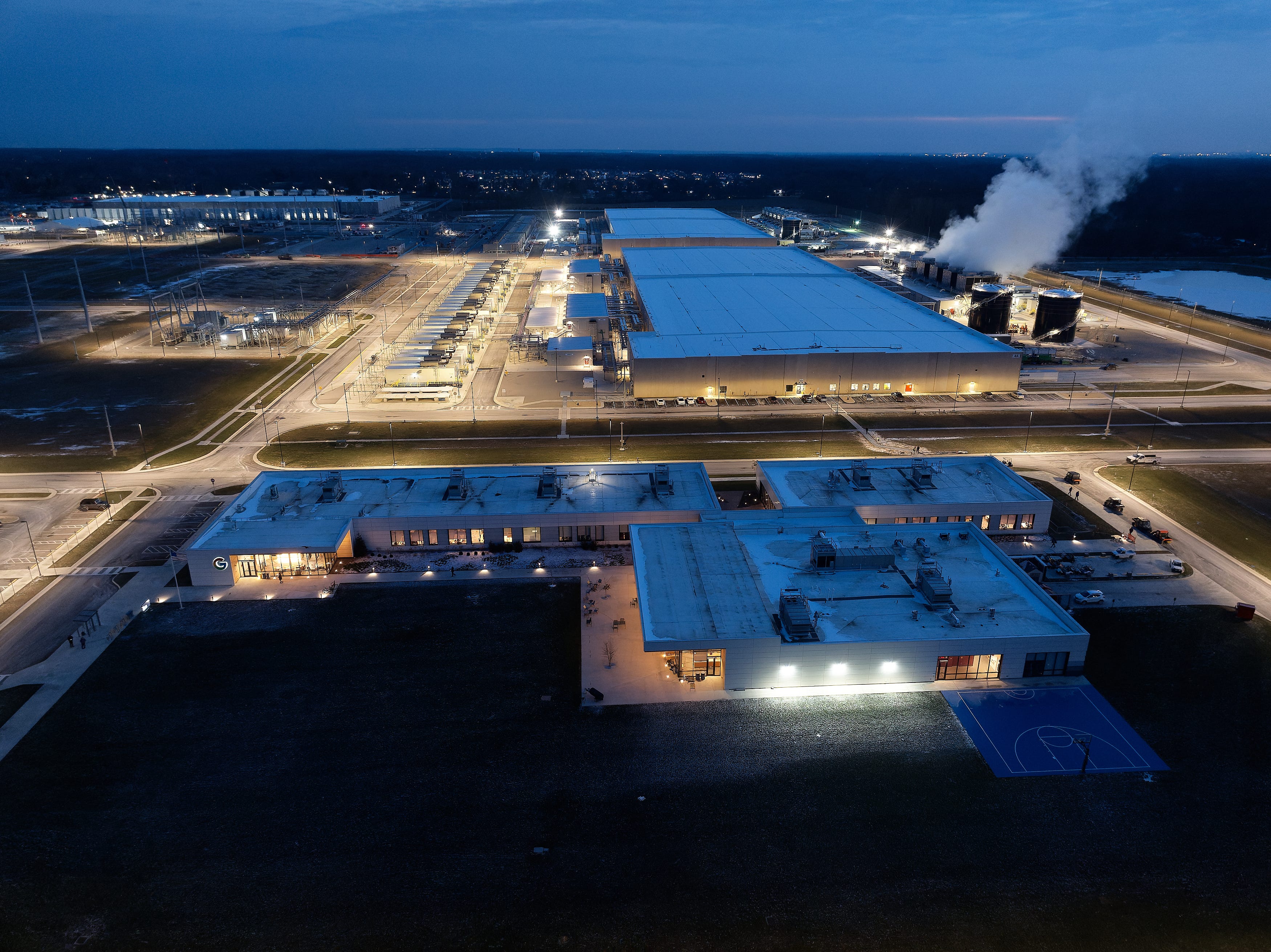
Particularly in North America, the rapid adoption and deployment of AI has led to increasing demand for computing power, which has resulted in enormous investment in hyperscale and modular data centers. This has also put pronounced strain on the energy supply from the grid which has led companies or municipalities to consider Innio’s onsite, prime and backup power solutions equipment to meet their power needs, which drives demand for their equipment and services.
The need for new supply chains, new infrastructure and adaptable energy solutions puts Innio at the perfect position. Flexibility is a key advantage they have, as their engines can operate on natural gas, biogas, hydrogen, biomethane, landfill gas, coal mine gas, furnace gases and liquefied natural gas. Turnkey, flexible, and tailored to fit any power need that a customer has which makes them honestly indispensable.
If you read anything to do with investments, I guarantee you will come across the word “catalyst.” By definition, it is “a person or thing that precipitates an event.” So, if you are trying to figure out if a company has catalyst for growth, that means you need to find something that will cause that growth to happen suddenly or sooner than expected. There is not a bigger catalyst than Data center developers and hyperscalers’ continued and urgent need for Innio’s on-site, prime and backup power generation.
Data center LTM revenue as of Q1 2026 came in at 11% and $317 million, but what is partly hidden is the dramatic increase in order intake volume, where Innio has been showing remarkable growth. In 2023, $27 million in data center equipment orders, and in 2025, that number was $2.28 billion. In just the first three months of 2026, it hit $1.01 billion. To put that in perspective, Innio generated more data center orders in the first quarter of 2026 than they did in all of 2023 and 2024 combined.
These equipment orders are not realized revenue to be clear, but they are a signed financial contract with a delivery schedule, fixed price, defined terms and conditions, so it carries low risk of cancellation. Data center orders now represent 61% of all equipment order intake, yet only 11% of actual revenue. As these orders get fulfilled through the upcoming years, data center revenue will grow dramatically.
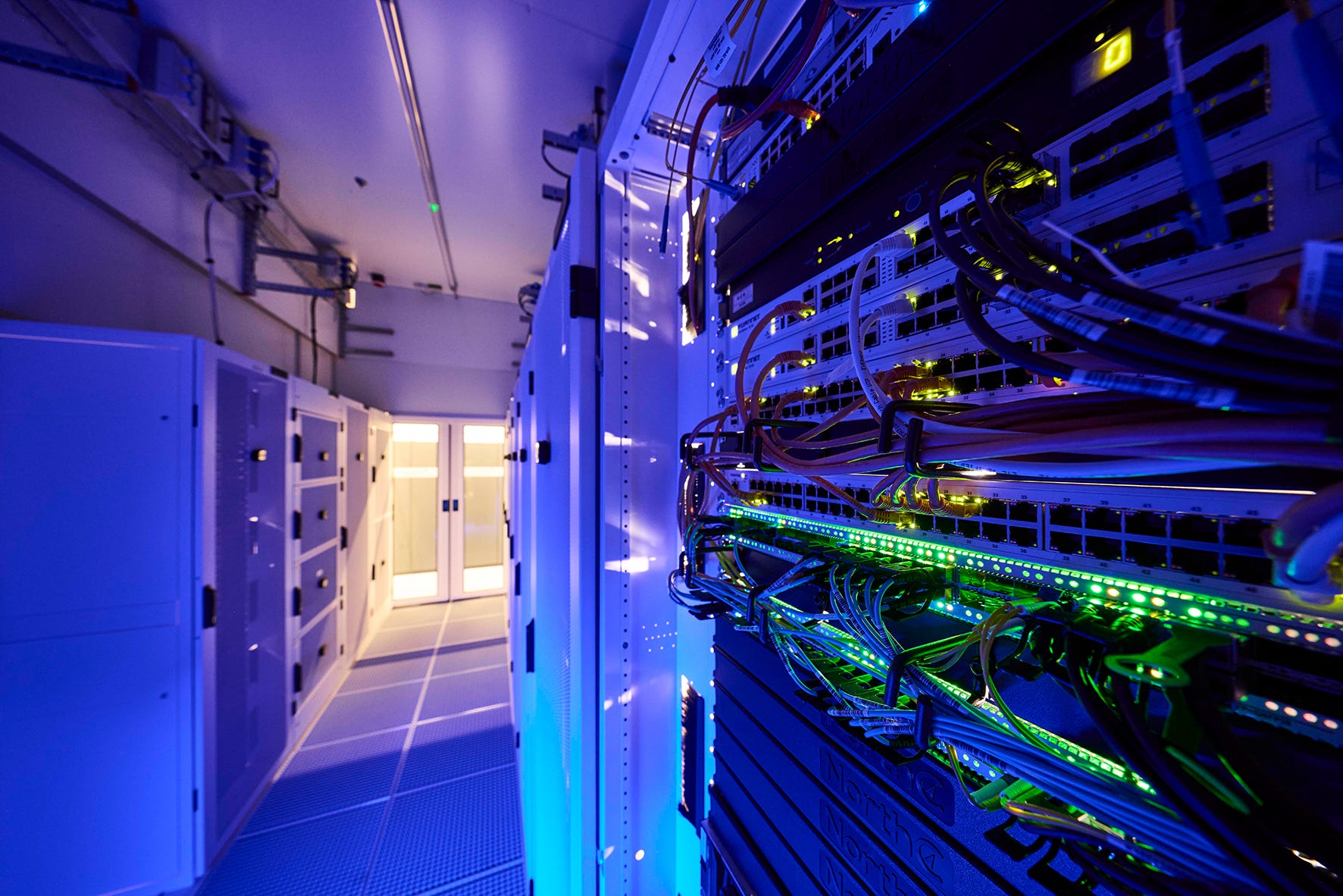
AI-driven data centers require power with operating characteristics beyond aggregate capacity, including fast start capability, high transient response, stable voltage and frequency control and the ability to accommodate large block loads. This means that power needs to be highly responsive to sudden changes in electricity demand, just as you have to be prepared for sudden changes in the price of a stock. This is a main reason the grid isn’t the most optimal solution. Innio’s high-speed reciprocating gas engine technology is perfectly suited to these requirements.
In February 2026, a major deal was announced between Innio and VoltaGrid, who signed a 1.5 GW supply agreement for 300 Jenbacher gas engines to power AI data centers, building on a prior 2.3 GW deal, bringing total contracted capacity between the two companies to 3.8 GW. This is incredible because if you put this in context, 3.8 GW is equivalent to the output of four nuclear plants.
In business everything is a race, a race to the finish line, a race against competitors, a race against time, and to win a race you need speed. Time to power has emerged as one of the most prominent considerations for data center developers. Any delay in energization stalls potential revenue, so certainty and speed of power delivery are instrumental factors in site selection. This is put clearly in the Innio’s S1 filing.
“As a result, data center operators are increasingly adopting behind-the-meter power solutions to secure certainty of supply and reduce exposure to grid constraints and curtailment risk as evidenced by the penetration of behind-the-meter and hybrid solutions, increasing from 10-20% of incremental data center power demand in 2025 to 50-60% of incremental data center power demand by 2030, according to the DOE Report and Oxcap Analytics.”
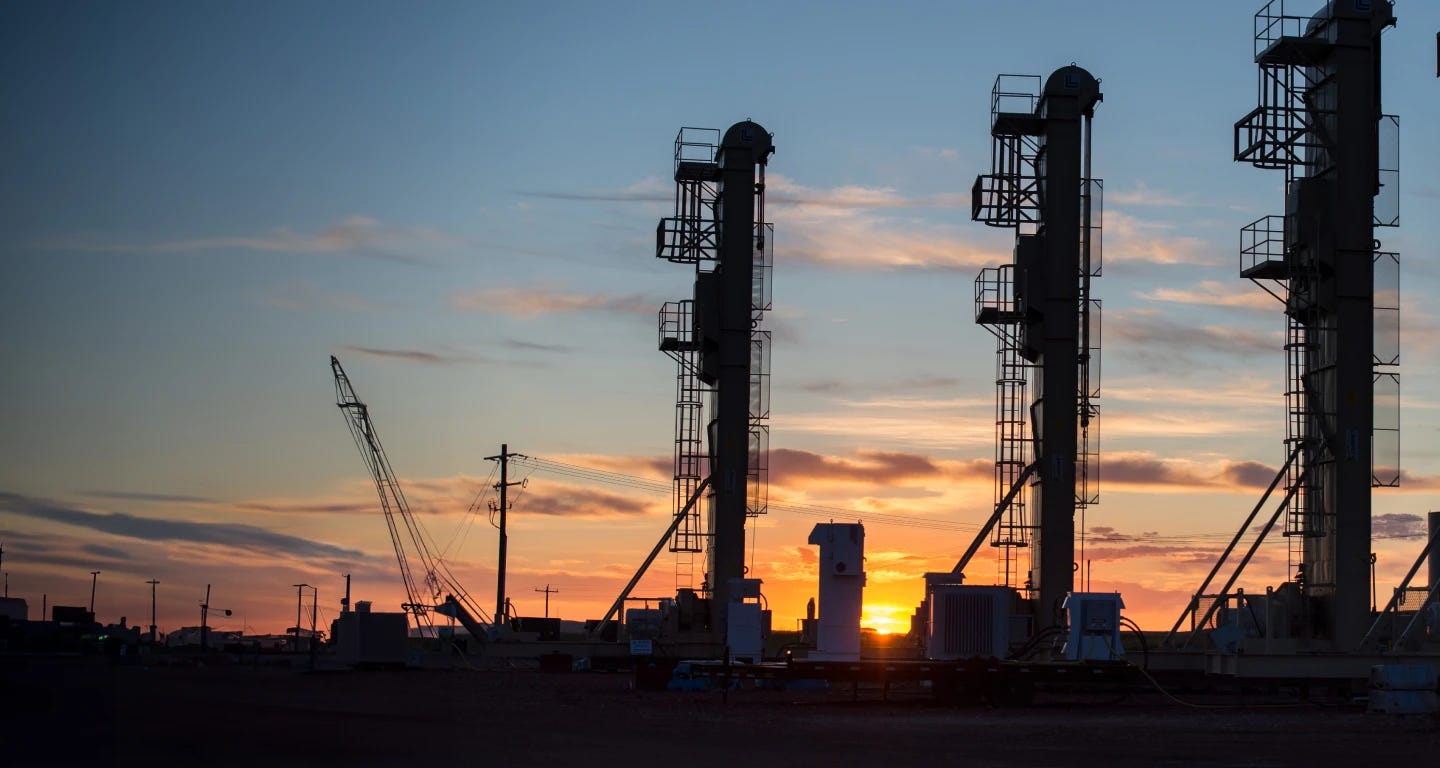
I’m going to bring up the phrase perfect storm again. Innio’s business lines are interconnected in a way that creates demand that feeds into each other. The same grid constraints driving data center operators toward onsite generation are also fueling demand for their broader power solutions, which serves utilities, municipalities, independent power producers, greenhouses and industrial facilities that face identical reliability and grid availability challenges.
For the last twelve months as of Q1 2026, power solutions generated $946 million in revenue and about $1.5 billion in order intake, making it the second largest segment today. The more demand for natural gas also creates a situation where compression is a direct benefactor as well.
Another key driver for compression equipment is stated in the most recent filing:
“Based on currently planned projects, global LNG export volumes are forecast to grow at approximately 12% per year through 2030 (Spears & Associates), increasing utilization across multiple compression “touch points” from upstream gathering through transmission and storage. This supports compression demand not only through new build, but also via higher throughput across existing systems.”
Additionally, the utilization of existing infrastructure has reached a high of 90%, which calls for a large volume of replacements, and therefore replacements of compressors. Overall, compression is technically demanding and carries high uptime requirements. (Uptime is just how long a system or piece of equipment is running and operational compared to the time being down for repairs or maintenance) This creates a strong barrier to entry for competition. Compression was the smallest portion of sales at 8% and $215 million in the last twelve months.
Finally, the most lucrative and largest part, services, which represented 47% of total revenue in the last twelve months at approximately $1.3 billion. The services segment is particularly special because Innio has an installed base of 44 gigawatts of engines in the field globally as of December 31, 2025. Each engine generates recurring revenue through maintenance contracts, spare parts and overhauls.
It is also important to recognize how widespread and entrenched they are. Their manufacturing reach spans over seven million square feet of land. Global coverage across approximately 100 countries through a commercial network that integrates direct sales, authorized distributors and channel partners.
They are investing aggressively, with the company planning to nearly triple total manufacturing capacity, with the majority targeting North America to support AI-related data center projects. I specifically remember Bill Ackman saying that if a company is spending a large portion of their capital expenditures on maintenance capex and is not investing into expanding capacity and growing manufacturing, that should be a clear sign to rethink your investment. While this is a fundamental concept, investors can easily ignore this aspect of the financials, and whether it’s a good sign or a concerning one as well.
Geographically, the company is more American than its German headquarters might suggest. According to MarketWatch, 39.7% of revenue came from North America and 39.4% from Europe, and 90% and 86% of North American revenue was derived from the United States for the three months ended March 31, 2026, and 2025, respectively.
But who owns Innio today? It’s important to ask this question because as Peter Lynch mentioned, it is the investor that determines their fate. The investor’s decision to put their hard-earned money into a company, means trusting the decisions that the owners are making. In November 2018, Advent International, a global private equity firm headquartered and founded in Boston, Massachusetts, completed a $3.25 billion acquisition of GE’s entire Distributed Power division, spinning out Jenbacher and Waukesha as a single standalone company under the Innio name. In March 2023, the Abu Dhabi Investment Authority acquired a significant minority stake.
Innio is backed by private equity, and a private equity firm’s goal is to exit, and one form of an exit is an initial public offering. You are exiting the portion of shares you are offering and returning capital to LPs. They are inclined to get the highest return. Typical timelines for exits are 5-7 years (they have actually been lengthening) and subsequently, that is what occurred. Together, Advent and ADIA brought the company public in June 2026, raising $2.73 billion at $27 per share, 20% more shares than originally planned, with the stock jumping 15% on its first day.
Purchasing any stock immediately following an initial public offering carries risk. The IPO price reflects the sellers’ best estimate of value at a specific moment, and in Innio’s case, the sellers were Advent International and the Abu Dhabi Investment Authority, who chose their exit after a historic run in energy infrastructure sentiment, to monetize their position. That is not a reason to dismiss the company however, but a reason to proceed deliberately.
There are risks worth noting and the first being that they carry $2.94 billion in long-term debt from the original leveraged buyout, which generated $163.6 million in interest expense in 2025. A spike in interest expense in Q1 2026, driven largely by foreign exchange revaluation on their debt and costs tied to the refinancing of their Jenbach facilities, pushed the quarter to a net loss of $9 million despite $189 million in operating cash flow.
It will take Innio time to pay down the debt load, but the core operations of the business are performing well, especially when you look at it from an annual perspective. 2025 revenue grew 22% to $2.64 billion, with net income of $141.8 million. Equipment order intake for 2025 came in at $3.88 billion, up 188% from 2024.
J. Woods, Chief Market Strategist at Freedom Capital Markets, put it plainly in a recent note to clients: as the AI buildout continues, Innio represents “a less obvious but potentially lucrative way to invest in the infrastructure needed to keep the lights on.”
The best returns come from getting in early. But that is extraordinarily difficult in practice, with one of the hardest parts being psychological. There is a classic social experiment where a room full of people are instructed to stand up, leaving one or two unknowing participants seated. Without explanation, those seated almost always stand, conforming to the crowd. Investing before a trend feels exactly like that. The stock is flat, maybe it’s down, people you talked about it with are skeptical, and there is always an opportunity cost underneath. The longer your money sits generating little or no return, the more the next best alternative compounds without you.
Personally, this to me is a classic picks and shovels opportunity where Innio is going to see outstanding growth and demand for their products. However, deciding whether to invest in this company requires you to ask yourself, whether you need to invest in stocks and what you expect to get out of them, whether you are a short or long-term investor, and how you will react to sudden, unexpected, and severe drops in price. It’s critical to define your objectives, clarify your attitudes and figure out what kind of investor you are, and what kind of investor are you going to be?
Disclaimer
The content published in Nummus is for informational and educational purposes only and does not constitute financial, investment, legal, or professional advice. The views expressed in this article are those of the author and do not represent the views of Nummus or its editors. Readers should not rely on any content published in Nummus as a basis for making financial or investment decisions and are encouraged to consult a qualified financial advisor before doing so.